Finding Expert Badminton Stringing Near Me: A Pro Guide
The Precision of the Shuttle: Why Your Racket Matters
A badminton player's relationship with their racket is intimate, almost symbiotic. While many enthusiasts focus heavily on the weight of the frame, the balance point, or the stiffness of the shaft, they often overlook the most critical interface between the athlete and the shuttle: the string bed. A poorly strung racket can transform a high-performance carbon fiber frame into a dead, unresponsive tool that drains energy from every smash and lacks the finesse required for delicate net play.
When a player begins to notice a drop in repulsion or a change in the "feel" of their shots, the immediate impulse is often to upgrade their equipment. However, the solution is rarely a new racket; it is more frequently a professional restringing. The search for reliable badminton stringing near me is not merely a quest for convenience, but a search for technical expertise that can calibrate a piece of sporting equipment to a specific playing style.
The difference between a DIY job or a low-quality local shop and a professional stringing service is measured in millimeters and pounds of tension. This article examines the nuances of string tension, the mechanics of the stringing process, and how to identify the highest caliber of service providers in your local area to ensure your game remains at its peak.
The Complete Overview of Professional Stringing
Professional stringing is a specialized craft that combines mechanical precision with an understanding of material science. It is not simply about pulling a cord tight; it is about managing the structural integrity of the racket frame while creating a consistent, predictable surface. When searching for badminton stringing near me, players must distinguish between general sports shops and dedicated badminton specialists who understand the specific stresses placed on a high-modulus graphite frame.
The process involves selecting the correct string gauge, determining the optimal tension for the player's skill level, and using high-end electronic machines to ensure even distribution. A professional service will account for the "shrinkage" of strings and the way different materials—such as multifilament nylon or high-performance polymers—react under tension. This technical attention to detail is what separates an amateur setup from a professional-grade instrument.
Historical Background and Evolution
In the early days of the sport, rackets were constructed from wood, and strings were often made from natural gut, typically derived from animal intestines. These materials were highly responsive but incredibly temperamental, sensitive to humidity, and prone to snapping under even moderate tension. Stringing was a manual, artisanal process that required significant tactile intuition, as the tools used were rudimentary compared to the precision machinery of the modern era.
The transition to metal and eventually to advanced carbon fiber frames revolutionized the sport, necessitating a parallel evolution in stringing technology. As frames became stiffer and lighter, they could withstand much higher tensions, allowing for the explosive power seen in modern professional play. This shift moved the craft from a manual art to a highly technical discipline, where electronic stringing machines now provide tension accuracy within a fraction of a kilogram, a necessity for the modern competitive athlete.
Table of Contents
- The Precision of the Shuttle: Why Your Racket Matters
- The Complete Overview of Professional Stringing
- Historical Background and Evolution
- Core Mechanisms: How It Works
- Key Benefits and Crucial Impact
- Major Advantages
- Comparative Analysis
- Future Trends and Innovations
- Conclusion
- Comprehensive FAQs
- Q: How often should I get my badminton strings replaced?
- Q: What is the ideal tension for a beginner?
- Q: Can I choose my own string type?
- Q: Why does my racket feel "dead" even after restringing?
- Q: Is it better to use an electronic or manual stringing machine?
Core Mechanisms: How It Works
The physics of a badminton string bed relies on the concept of "trampoline effect" versus "control tension." When a shuttle hits the strings, the string bed deforms slightly, storing elastic energy that is then released to propel the shuttle. At lower tensions, the strings stretch more, providing a larger sweet spot and more power through this trampoline effect. At higher tensions, the string bed becomes much stiffer, offering the player superior control and precision at the expense of raw power.
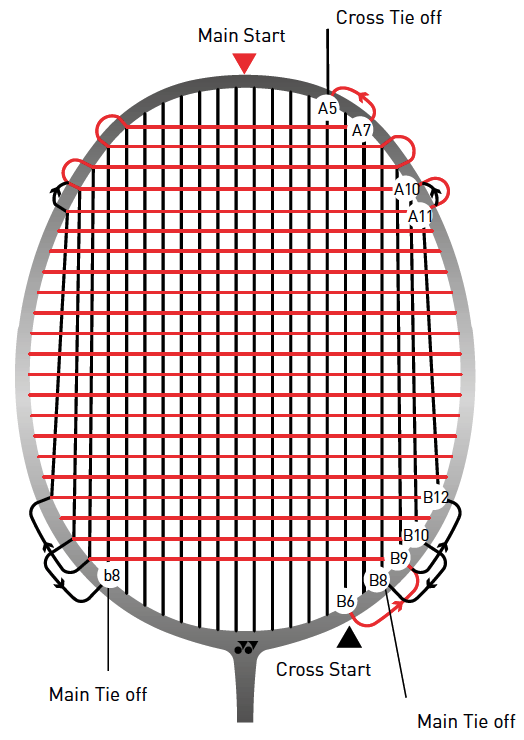
Achieving the perfect balance requires a deep understanding of how the mains (vertical strings) and crosses (horizontal strings) interact. The tension must be applied in a specific sequence to prevent the frame from warping or cracking. A skilled technician uses a specialized pattern to ensure that the tension is distributed symmetrically across the hitting area, maintaining the aerodynamic integrity of the racket while optimizing the rebound characteristics for the user's specific swing speed.

Key Benefits and Crucial Impact
Investing in professional stringing services yields immediate dividends in both performance and longevity. For the competitive player, the ability to rely on a consistent response from the racket is paramount. When you find high-quality badminton stringing near me, you are essentially fine-tuning your primary tool to react predictably to every movement, whether it is a high-speed smash or a tight drop shot.
Beyond performance, there is a significant component of injury prevention. Incorrect tension can lead to excessive vibration being transferred through the shaft and into the player's wrist, elbow, and shoulder. A properly strung racket absorbs and dissipates shock more effectively, reducing the risk of repetitive strain injuries such as tennis elbow, which is common among badminton players who use rackets that are too stiff or improperly tensioned.
"The racket is an extension of the arm; the strings are the nervous system that transmits the intent of the player to the shuttlecock."
Major Advantages
- Enhanced Control: High-tension stringing allows for much more precise placement of the shuttle, essential for tactical net play and deceptive shots.
- Increased Repulsion: Utilizing high-quality multifilament strings can maximize the energy return, providing more "pop" during clears and smashes.
- Structural Protection: Professional stringers use calibrated machines that prevent over-stretching or uneven loading, protecting your expensive frame from warping.
- Customization: Expert services allow you to tailor your setup based on your playing style, such as choosing thicker strings for durability or thinner strings for speed.
- Consistency: Regular professional restringing ensures that the tension remains stable, preventing the "dead" feeling that occurs as strings lose their elasticity over time.
Comparative Analysis
| Feature | Low-Tension Setup | High-Tension Setup |
|---|---|---|
| Primary Benefit | Power and Ease of Use | Control and Precision |
| Sweet Spot Size | Larger and more forgiving | Smaller and more demanding |
| Player Skill Level | Beginner to Intermediate | Advanced to Professional |
| Physical Demand | Lower impact on joints | Higher impact/requires faster swing |

Future Trends and Innovations
The future of badminton stringing lies in the integration of smart materials and data-driven customization. We are seeing the emergence of "intelligent" strings that incorporate nano-technologies to enhance friction and repulsion. These materials are designed to react dynamically to the impact of the shuttle, potentially offering the power of low tension with the control of high tension—a holy grail for racket technicians.
Furthermore, the digitalization of the stringing process is accelerating. We expect to see more services offering digital profiles for individual players, where a technician can track the exact tension, string type, and wear patterns of a player's entire racket collection. This level of data will allow for predictive maintenance, alerting players when their strings are about to lose their optimal tension before their performance actually suffers.
Conclusion
Finding the right badminton stringing near me is a fundamental step in any serious player's journey. It is the bridge between having a piece of equipment and having a precision instrument. While the temptation to save money by using inferior services or DIY methods is high, the long-term costs in terms of lost performance, damaged frames, and potential physical injury are far greater.
Ultimately, your racket is only as good as its string bed. By seeking out specialists who understand the intricate relationship between tension, material, and mechanics, you ensure that your equipment works with you, rather than against you. Treat your strings with the respect they deserve, and your game will reflect that investment on the court.
Comprehensive FAQs
Q: How often should I get my badminton strings replaced?
A: This depends on your frequency of play and playing style. Generally, strings should be replaced every 3 to 6 months. However, if you notice a significant drop in repulsion, or if you see fraying or "notching" where the strings cross, you should seek badminton stringing near me immediately to avoid a mid-game snap.
Q: What is the ideal tension for a beginner?
A: Beginners should typically aim for lower tension, usually between 20 and 24 pounds. Lower tension provides a larger sweet spot and more power, which helps compensate for less-than-perfect swing mechanics. As your technique improves, you can gradually increase the tension.
Q: Can I choose my own string type?
A: Absolutely. When looking for professional services, you should ask about their inventory. You can choose between thin strings for maximum repulsion and feel, or thicker, more durable strings if you tend to hit the shuttle off-center frequently.
Q: Why does my racket feel "dead" even after restringing?
A: This could be due to several factors: using a string that is too thick for your style, tension that is too high for your swing speed, or even structural damage to the racket frame itself. A professional stringer can help diagnose these issues.
Q: Is it better to use an electronic or manual stringing machine?
A: Electronic machines are significantly superior. They provide much higher accuracy in tension delivery and ensure that the tension is applied consistently across the entire frame, which is vital for the longevity of high-end rackets.
Leave a Comment
Comments are moderated before appearing. The data you submit is processed according to the Privacy Policy of cixa.org.