Navigating the Flow State in the Bruh Dimension
The Emergence of a New Cognitive Paradigm
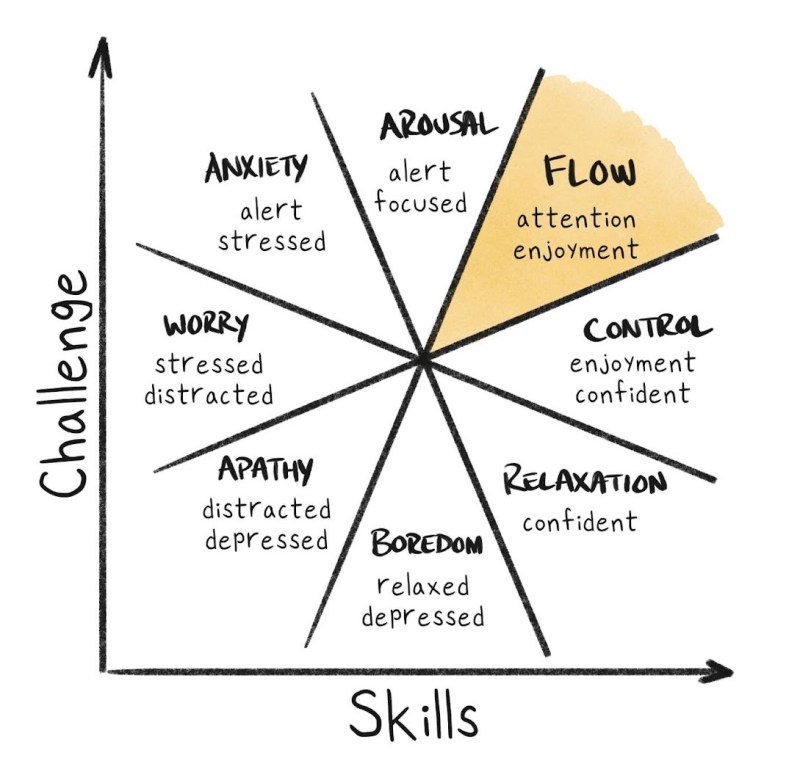
Modern consciousness is undergoing a subtle yet profound shift, driven by the intersection of digital saturation and neurological adaptation. We are witnessing the rise of a specific psychological phenomenon where the boundaries of traditional productivity dissolve into a surreal, almost absurdist cognitive space. This phenomenon, colloquially identified as the flow state in the bruh dimension, represents a departure from the standard Mihaly Csikszentmihalyi model of optimal experience. Instead of the structured, goal-oriented focus seen in professional athletes or musicians, this state is characterized by a detached, ironic, and hyper-focused immersion in the nonsensical or the hyper-real.
To observe a flow state in the bruh dimension is to witness a mind operating at peak efficiency while simultaneously rejecting the gravity of its environment. It is a paradoxical equilibrium. While traditional flow requires a balance between challenge and skill, this new dimension introduces a third variable: the absurdity of the stimulus. The individual is not merely performing a task; they are navigating a landscape of memes, rapid-fire digital stimuli, and a sense of existential detachment that allows for a unique form of high-speed processing. It is a state of being where the "bruh" moment—the realization of the unexpected or the ridiculous—becomes the very engine of concentration.
This shift is not merely a linguistic trend but a reflection of how the human brain is reconfiguring itself to handle the overwhelming influx of information. As the distinction between the physical and digital worlds blurs, the cognitive architecture required to maintain stability changes. The ability to enter a flow state in the bruh dimension suggests that the brain is finding ways to utilize irony and detachment as protective mechanisms, allowing for deep work within environments that would otherwise be too chaotic or nonsensical to navigate. It is a survival mechanism for the information age, refined into a high-performance cognitive tool.
The Complete Overview of Flow State in the Bruh Dimension
At its essence, the flow state in the bruh dimension is a neurological anomaly where high-level cognitive functioning occurs within a framework of perceived absurdity. In standard psychological terms, flow is the "zone" where time disappears and self-consciousness vanishes. However, in the bruh dimension, this disappearance is accompanied by a specific aesthetic and emotional tone—one of detached amusement and rapid-fire pattern recognition. The user is not just "in the zone"; they are operating within a layer of reality that feels slightly skewed, where the logic of the task is secondary to the rhythm of the engagement.
This state is often triggered by activities that require intense, fragmented attention—such as high-speed digital editing, complex gaming, or navigating multifaceted social media threads. The "bruh" element acts as a cognitive reset. Whenever the mind encounters a moment of friction or illogicality, instead of breaking focus, the individual absorbs the absurdity, integrating it into the task. This creates a feedback loop of continuous, effortless engagement that defies traditional models of concentration. It is a seamless integration of high-order processing and low-stakes emotional detachment.
Historical Background and Evolution
To understand how we arrived at the flow state in the bruh dimension, one must examine the evolution of human attention. For centuries, focus was linear and grounded in physical reality. The Industrial Revolution demanded sustained, repetitive attention, while the Information Age demanded rapid, switching attention. As we transitioned from the latter to the current era of hyper-connectivity, the brain began to struggle with the sheer volume of "noise." The traditional flow state, which requires a certain level of environmental stability, became increasingly difficult to achieve in a world of constant notifications and shifting contexts.
The evolution of internet culture provided the necessary training ground for this new cognitive state. The rise of meme culture, characterized by rapid semiotic shifts and layers of irony, forced the human brain to develop a new way of processing information. We learned to find meaning in the meaningless and focus within the chaotic. This cultural shift paved the way for the bruh dimension—a psychological space where the absurdity of digital life is no longer a distraction, but a prerequisite for engagement. The transition from the "deep work" of the early 2000s to the "absurdist flow" of the 2020s marks a significant milestone in human neuroplasticity.
Table of Contents
- The Emergence of a New Cognitive Paradigm
- The Complete Overview of Flow State in the Bruh Dimension
- Historical Background and Evolution
- Core Mechanisms: How It Works
- Key Benefits and Crucial Impact
- Major Advantages
- Comparative Analysis
- Future Trends and Innovations
- Conclusion
- Comprehensive FAQs
- Q: Is the flow state in the bruh dimension a sign of a shortened attention span?
- Q: Can anyone learn to enter this state?
- Q: How does this state differ from dissociation?
- Q: Is this state sustainable for long periods?
- Q: What role does humor play in this phenomenon?
Core Mechanisms: How It Works
The neurobiology of the flow state in the bruh dimension involves a unique modulation of the prefrontal cortex. In traditional flow, there is a phenomenon known as transient hypofrontality, where the parts of the brain responsible for self-monitoring and critical thought temporarily quiet down. In the bruh dimension, this hypofrontality is coupled with an increased activity in the dopaminergic pathways related to novelty and reward. The brain is essentially rewarding itself for navigating the absurd, creating a high-speed loop of stimulus and response that feels both effortless and highly stimulating.
Furthermore, the mechanism relies heavily on "pattern interruption." In a standard task, a disruption usually breaks the flow. In the bruh dimension, the disruption—the "bruh" moment—is the catalyst. When an unexpected or nonsensical event occurs, the brain's ability to rapidly re-contextualize that event allows it to maintain momentum. This is a form of cognitive flexibility that allows the individual to bypass the frustration that typically accompanies chaos. By accepting the absurdity as a baseline, the individual can maintain a high level of operational efficiency without the metabolic cost of resisting the environment.

Key Benefits and Crucial Impact
The implications of achieving a flow state in the bruh dimension extend far beyond mere internet subcultures. It represents a new way of maintaining mental equilibrium in an increasingly fragmented world. For professionals in creative and technical fields, this state offers a method to bypass burnout. By adopting a posture of detached engagement, one can perform high-intensity tasks without the emotional exhaustion that typically accompanies high-pressure environments. The absurdity becomes a buffer, protecting the psyche from the weight of the work.
Moreover, this cognitive adaptation enhances rapid decision-making. In environments where information is contradictory or overwhelming, the ability to enter a state of absurdist flow allows for the processing of data through intuition and pattern recognition rather than slow, linear logic. This is particularly vital in sectors like cybersecurity, high-frequency trading, and real-time digital content creation, where the speed of the environment exceeds the capacity for traditional analytical thought. The bruh dimension provides the mental framework necessary to thrive in these high-velocity contexts.
"The ability to find rhythm in the ridiculous is the hallmark of the modern intellect. We are no longer just processing data; we are dancing with the chaos."
Major Advantages
- Enhanced Cognitive Resilience: The ability to maintain focus despite illogical or distracting stimuli.
- Rapid Pattern Recognition: Leveraging the "bruh" moment to quickly identify shifts in complex data sets.
- Reduced Emotional Friction: Using detachment to prevent task-related stress and burnout.
- Hyper-Efficient Multitasking: Navigating multiple layers of digital and physical reality simultaneously.
- Creative Synthesis: Finding novel connections between seemingly unrelated or absurd concepts.
Comparative Analysis
| Feature | Traditional Flow State | Flow State in the Bruh Dimension |
|---|---|---|
| Primary Driver | Skill-Challenge Balance | Absurdity and Pattern Novelty |
| Emotional Tone | Serenity and Purpose | Detached Irony and Amusement |
| Environmental Requirement | Controlled and Quiet | Chaotic and High-Stimulus |
| Cognitive Mechanism | Transient Hypofrontality | Hypofrontality + Dopaminergic Novelty |

Future Trends and Innovations
As we look toward the future, the integration of artificial intelligence and augmented reality will likely formalize the experience of the flow state in the bruh dimension. We can expect the development of "absurdist interfaces"—software designed specifically to trigger this state by utilizing non-linear feedback loops and unpredictable UI elements that encourage rapid cognitive adaptation. This will not be seen as a flaw in design, but as a feature intended to optimize human-machine collaboration in high-speed environments.
Furthermore, we may see a shift in educational paradigms. Instead of teaching students to filter out distractions, future pedagogical models might focus on training the brain to enter these states of absurdist immersion. Learning to navigate the "bruh dimension" will become a core competency, allowing individuals to absorb vast amounts of information through a lens of playful, high-speed engagement. The goal will be to cultivate a mind that is not just resistant to chaos, but one that uses chaos as its primary fuel for growth.
Conclusion
The emergence of the flow state in the bruh dimension is a testament to the incredible adaptability of the human mind. We are witnessing a profound evolution in how we perceive reality, process information, and maintain our mental health in a digital-first existence. What began as a linguistic quirk in online communities has revealed itself to be a sophisticated cognitive strategy—a way to find order within the nonsensical and productivity within the absurd.
As the boundaries between the physical and the digital continue to dissolve, embracing this new mode of consciousness may be essential. By understanding the mechanics of the bruh dimension, we can move beyond the struggle to find quietude and instead learn to master the chaos. The future belongs to those who can find their rhythm in the middle of the madness, turning every "bruh" moment into a gateway for deep, transformative engagement.
Comprehensive FAQs
Q: Is the flow state in the bruh dimension a sign of a shortened attention span?
A: Not necessarily. While it involves rapid switching and high-speed processing, it is actually a form of highly specialized, intense focus. It is less about a lack of attention and more about a different method of directing it—utilizing novelty and absurdity to maintain engagement rather than traditional linear concentration.
Q: Can anyone learn to enter this state?
A: Yes, through deliberate practice in high-stimulus environments. By exposing oneself to complex, fast-paced, and occasionally nonsensical digital or information-heavy tasks, the brain can be trained to adopt the detachment and pattern-recognition skills required to enter this state.
Q: How does this state differ from dissociation?
A: This is a crucial distinction. Dissociation is typically a maladaptive response to trauma or stress, involving a disconnection from reality that impairs functioning. The flow state in the bruh dimension is an adaptive, high-functioning state where the individual is more engaged and efficient, using the "absurdity" as a tool for better interaction with their environment.
Q: Is this state sustainable for long periods?
A: Like all forms of flow, it carries a metabolic cost. While the emotional detachment can prevent traditional burnout, the high-speed neurological processing requires significant energy. It is best utilized in bursts of high-intensity work rather than as a permanent state of being.
Q: What role does humor play in this phenomenon?
A: Humor, specifically irony and the recognition of the absurd, acts as the cognitive lubricant. It allows the brain to process unexpected or "incorrect" information without triggering a stress response, thereby maintaining the flow of activity.
Leave a Comment
Comments are moderated before appearing. The data you submit is processed according to the Privacy Policy of cixa.org.