How to Use the Formula for Interest Compounded Quarterly

The Mathematics of Wealth: Understanding Quarterly Growth
Financial literacy is often defined by the ability to perceive the invisible forces that shape capital over time. Among these forces, the frequency at which interest is applied to a principal balance remains one of the most significant variables in long-term wealth accumulation. While many investors focus solely on the nominal interest rate, the true engine of growth lies in the compounding frequency. When interest is calculated and added to the principal four times a year, the mathematical trajectory of an investment shifts significantly compared to annual or simple interest models.
To navigate the complexities of modern banking and investment vehicles, one must grasp the specific mechanics of periodic growth. Understanding the formula for interest compounded quarterly allows an individual to move beyond guesswork and into the realm of precise financial forecasting. This capability is essential for evaluating savings accounts, certificates of deposit (CDs), and various debt instruments that utilize quarterly intervals to determine interest accrual. By calculating these figures, investors can discern the actual yield of an asset, often referred to as the Annual Percentage Yield (APY), rather than relying on the stated Annual Percentage Rate (APR).
The distinction between simple interest and compounded interest is the difference between linear and exponential growth. In a simple interest scenario, growth is static; in a compounding scenario, the interest earned in the first period begins to earn its own interest in the second period. When this process occurs quarterly, the momentum builds more rapidly than an annual cycle, creating a compounding effect that rewards patience and strategic capital placement. This article provides a rigorous examination of the mathematical structures, historical context, and practical applications of this essential financial concept.
The Complete Overview of the Formula for Interest Compounded Quarterly
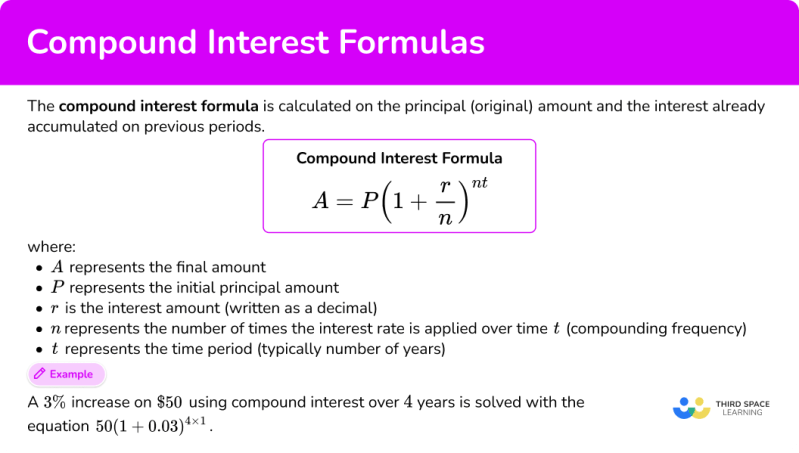
At its core, the formula for interest compounded quarterly is an algebraic expression designed to determine the future value of an investment or the total amount of debt accumulated over a specific duration. The mathematical structure relies on several key variables: the principal amount (the initial sum of money), the annual interest rate (expressed as a decimal), the number of times interest is compounded per year (which is four for quarterly calculations), and the total number of years the money is invested or borrowed. By integrating these variables, one can project the exact terminal value of a financial position.
The standard mathematical representation is A = P(1 + r/n)^(nt). In this equation, 'A' represents the final amount, 'P' is the principal, 'r' is the annual interest rate, 'n' is the compounding frequency (set to 4), and 't' is the time in years. The division of the annual rate by four is the critical step that accounts for the quarterly intervals, ensuring that the interest applied each three-month period is a proportional slice of the annual rate. This periodic application ensures that the base upon which the next interest calculation is performed is constantly expanding, leading to the characteristic upward curve of exponential growth.
Historical Background and Evolution
The concept of compound interest is not a modern invention; its roots can be traced back to ancient civilizations, including Mesopotamia and Egypt, where rudimentary forms of interest were applied to agricultural loans. However, the formal mathematical treatment of compounding evolved significantly during the Renaissance and the Enlightenment. As global trade expanded and banking institutions became more sophisticated, the need for precise methods to calculate the time value of money became paramount. Early mathematicians began to recognize that the frequency of interest application could drastically alter the repayment obligations of borrowers and the returns for lenders.
The transition from manual, irregular interest calculations to standardized periodic compounding was driven by the Industrial Revolution and the subsequent rise of modern central banking. As financial markets became more liquid and complex, the standardization of the quarterly cycle became a common practice for many institutional lenders and savings banks. This period saw the refinement of the algebraic formulas we use today, moving from approximate tables to exact logarithmic and exponential functions. This evolution transformed interest from a simple fee for borrowing into a sophisticated tool for capital allocation and long-term economic planning.
Table of Contents
- The Mathematics of Wealth: Understanding Quarterly Growth
- The Complete Overview of the Formula for Interest Compounded Quarterly
- Historical Background and Evolution
- Core Mechanisms: How It Works
- Key Benefits and Crucial Impact
- Major Advantages
- Comparative Analysis
- Future Trends and Innovations
- Conclusion
- Comprehensive FAQs
- Q: Why is the interest rate divided by four in the quarterly formula?
- Q: How does quarterly compounding differ from monthly compounding?
- Q: Can I use the formula for interest compounded quarterly to calculate loan payments?
- Q: What is the difference between APR and APY in the context of quarterly compounding?
- Q: Does a higher compounding frequency always mean more money for the investor?
Core Mechanisms: How It Works
The mechanics of quarterly compounding rely on the concept of "interest on interest." Every three months, the financial institution calculates the interest earned during that specific quarter based on the current balance. This calculated amount is then immediately credited to the principal. Consequently, when the next quarter begins, the interest is no longer calculated solely on the original deposit, but on the new, slightly larger balance. This creates a feedback loop where the growth rate itself is accelerating, even if the nominal interest rate remains constant.
To visualize this, consider the mathematical breakdown of the quarterly rate. If an investment carries a 4% annual interest rate, a quarterly compounding structure does not apply 4% every three months. Instead, it applies 1% (4% divided by 4) at the end of each quarter. While 1% may seem modest, the cumulative effect over several years is profound because the 1% is applied to an ever-increasing base. This mechanism is the reason why an investment with quarterly compounding will always yield a higher total return than one with annual compounding, assuming all other variables remain equal.
Key Benefits and Crucial Impact
The implications of understanding the formula for interest compounded quarterly extend far beyond academic mathematics; they are central to effective wealth management. For the saver, quarterly compounding acts as a silent partner in wealth creation, incrementally increasing the efficiency of every dollar deposited. For the borrower, however, this same mechanism can increase the total cost of debt if the interest is being added to the principal balance, making it vital to understand how frequently interest is applied to loans and credit products.
In the broader economic landscape, the frequency of compounding influences consumer behavior and institutional liquidity. High-frequency compounding can incentivize long-term savings, providing a stable foundation for capital markets. Conversely, it necessitates a higher level of scrutiny for consumers when evaluating the true cost of borrowing. By mastering the math behind these cycles, individuals can make informed decisions that align with their long-term fiscal objectives, whether they are planning for retirement, purchasing real estate, or managing corporate cash flows.
"Compound interest is the eighth wonder of the world. He who understands it, earns it; he who doesn't, pays it." — Often attributed to Albert Einstein.
Major Advantages
- Accelerated Growth: Quarterly compounding provides a faster accumulation of wealth compared to annual compounding by increasing the principal four times per year.
- Predictable Forecasting: Using the specific formula for interest compounded quarterly allows for highly accurate long-term financial projections and retirement planning.
- Enhanced Yield: The effective annual yield (APY) is higher than the nominal interest rate, providing better actual returns on savings and fixed-income assets.
- Mitigation of Inflation: The exponential nature of quarterly compounding can help capital maintain its purchasing power more effectively against inflationary pressures.
- Strategic Reinvestment: It allows investors to understand the exact timing of when their interest becomes "working capital," enabling more precise reinvestment strategies.
Comparative Analysis
| Compounding Frequency | Calculation Basis | Growth Velocity | Typical Use Case |
|---|---|---|---|
| Annual | Once per year | Lowest | Simple long-term bonds |
| Semi-Annual | Twice per year | Moderate | Certain corporate bonds |
| Quarterly | Four times per year | High | Savings accounts and CDs |
| Monthly | Twelve times per year | Very High | Mortgages and credit cards |

Future Trends and Innovations
As we move further into the digital age, the landscape of interest calculation is undergoing a significant transformation. The rise of FinTech and decentralized finance (DeFi) is introducing even higher frequencies of compounding. While traditional banking has long relied on quarterly or monthly cycles, blockchain-based protocols are experimenting with continuous compounding, where interest is calculated and applied every second or even every transaction. This shift is pushing the mathematical boundaries of how we perceive the time value of money and is forcing a re-evaluation of traditional interest models.
Furthermore, the integration of Artificial Intelligence in personal finance management is making the application of the formula for interest compounded quarterly more accessible to the average consumer. AI-driven platforms can now simulate thousands of different compounding scenarios in real-time, allowing users to see the immediate impact of changing their compounding frequency or interest rate. This level of granular analysis will likely become a standard feature in all wealth management tools, moving the power of complex mathematical modeling from the hands of institutional analysts to the individual investor.
Conclusion
Mastering the formula for interest compounded quarterly is a fundamental requirement for anyone seeking to navigate the modern financial environment with precision. It is not merely an exercise in algebra, but a critical skill that dictates the efficiency of wealth accumulation and the true cost of debt. By understanding how the periodic application of interest transforms a linear rate into an exponential curve, investors can better position themselves to capitalize on growth opportunities while avoiding the pitfalls of high-frequency debt accumulation.
Ultimately, the ability to calculate and interpret quarterly compounding provides a level of clarity that is essential for long-term success. Whether you are evaluating a new high-yield savings account, comparing mortgage terms, or structuring a complex investment portfolio, the mathematical principles remain the same. As financial technologies continue to evolve and compounding frequencies potentially increase, the foundational knowledge of these periodic growth mechanisms will remain a cornerstone of financial intelligence and economic agency.
Comprehensive FAQs
Q: Why is the interest rate divided by four in the quarterly formula?
A: The annual interest rate (r) represents the total interest for a full year. Since quarterly compounding applies interest every three months, you must use the proportional rate for that specific period. Dividing the annual rate by four ensures that the calculation reflects the correct interest amount for a single quarter.
Q: How does quarterly compounding differ from monthly compounding?
A: Monthly compounding applies interest twelve times a year, whereas quarterly compounding applies it only four times. Because monthly compounding adds interest to the principal more frequently, it results in a slightly higher effective annual yield and faster growth than quarterly compounding, assuming the annual rate is the same.
Q: Can I use the formula for interest compounded quarterly to calculate loan payments?
A: While the formula A = P(1 + r/n)^(nt) calculates the total future value of a lump sum, it is not the same as the formula used for calculating monthly amortized loan payments (like a mortgage). However, the principle of periodic interest application is the same; for loans, the formula is adjusted to account for regular, periodic payments that reduce the principal over time.
Q: What is the difference between APR and APY in the context of quarterly compounding?
A: APR (Annual Percentage Rate) is the nominal interest rate without accounting for the effects of compounding. APY (Annual Percentage Yield) is the actual rate of return earned over a year, taking into account the effects of compounding. For any frequency higher than annual, the APY will always be higher than the APR.
Q: Does a higher compounding frequency always mean more money for the investor?
A: Yes, if you are the one earning interest (the saver or investor), a higher compounding frequency will always result in a higher total return. However, if you are the one paying interest (the borrower), a higher compounding frequency increases the total amount you will owe over the life of the loan.
Leave a Comment
Comments are moderated before appearing. The data you submit is processed according to the Privacy Policy of cixa.org.