Understanding Risk: How Does Umbrella Insurance Work?
Financial security is often measured by the accumulation of assets: the family home, a diversified investment portfolio, and retirement accounts. However, true wealth management requires an equally sophisticated approach to risk mitigation. While standard homeowners and auto policies provide a foundational layer of defense, they possess inherent ceilings. When a catastrophic legal judgment exceeds these limits, the individual becomes personally liable for the remainder, placing their entire lifestyle at risk.
This vulnerability is where supplemental liability coverage becomes essential. Many high-net-worth individuals and growing families find themselves asking, how does umbrella insurance work to prevent a single accident from causing total financial ruin? It is not merely an additional policy; it is a strategic extension of your existing risk management framework, designed to catch the fallout that standard coverage leaves behind.
Navigating the complexities of excess liability requires a clear understanding of how various insurance layers interact. To protect what you have built, you must understand the mechanics of secondary coverage, the specific triggers that activate it, and the legal landscapes it is designed to navigate. This analysis provides the clarity necessary to determine if your current protections are sufficient for your long-term stability.
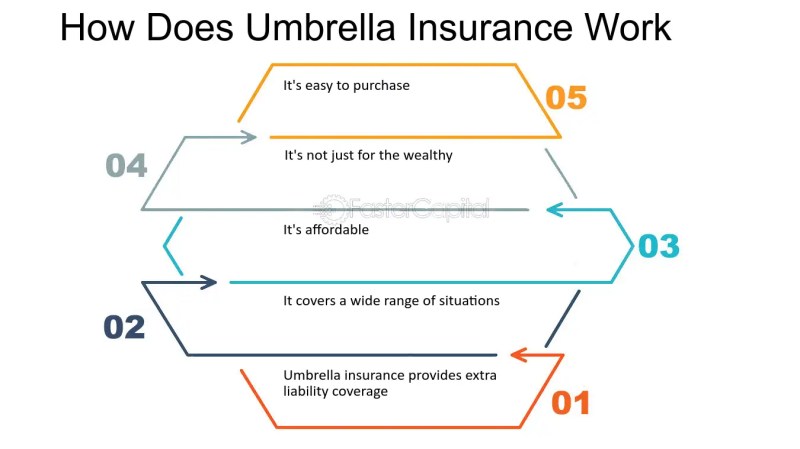
The Complete Overview of Umbrella Insurance
At its most fundamental level, umbrella insurance is a type of excess liability policy. It does not cover damage to your physical property or medical expenses for your own injuries; instead, it focuses exclusively on third-party claims. When someone sues you for bodily injury or property damage, and the cost of that claim surpasses the limits of your primary auto or homeowners policy, the umbrella policy kicks in to pay the difference. This secondary layer of protection is what provides the "umbrella" effect, shielding your savings and assets from being seized to satisfy a court judgment.
Understanding how does umbrella insurance work necessitates a distinction between "first-party" and "third-party" coverage. Most people are familiar with first-party coverage, which pays for your own losses (like your car being stolen). Umbrella insurance is almost entirely third-party coverage. It addresses the legal costs, settlements, and judgments resulting from your perceived negligence. Whether it is a multi-car accident involving significant injury or a slip-and-fall incident on your property, this policy acts as the final line of defense between a legal crisis and your personal bank account.
Historical Background and Evolution
The concept of excess liability is not a modern invention, but its application to personal lifestyle protection has evolved significantly. Historically, liability insurance was a tool reserved almost exclusively for commercial enterprises and industrial giants. As corporations grew, so did the complexity of litigation, necessitating specialized policies to cover massive damages that standard general liability could not handle. For much of the 20th century, the average individual lived with the assumption that their standard household policies were sufficient, as the litigious nature of society had not yet reached its current intensity.
Table of Contents
- The Complete Overview of Umbrella Insurance
- Historical Background and Evolution
- Core Mechanisms: How It Works
- Key Benefits and Crucial Impact
- Major Advantages
- Comparative Analysis
- Future Trends and Innovations
- Conclusion
- Comprehensive FAQs
- Q: Do I need umbrella insurance if I don't have much money?
- Q: Will umbrella insurance cover my business liabilities?
- Q: How does umbrella insurance work with my existing auto policy?
- Q: Can I choose my own coverage limits for an umbrella policy?
- Q: Does umbrella insurance cover intentional acts?
The shift toward personal umbrella policies occurred as the legal landscape changed. The rise of "social inflation"—a term used by insurers to describe the increasing size of jury awards—and the increasing frequency of complex personal injury lawsuits forced a change in consumer behavior. As personal wealth became more digitized and easily accessible through diverse investment vehicles, the incentive to protect those assets against legal claims grew. Today, what was once a niche product for the ultra-wealthy has become a standard recommendation for anyone with significant equity or income.
Core Mechanisms: How It Works
To grasp how does umbrella insurance work in a practical sense, one must visualize a "stacking" effect of coverage. Imagine you have an auto policy with a liability limit of $300,000. If you are at fault in an accident that results in $1,000,000 in medical bills for the other party, your auto policy will pay the first $300,000. Without supplemental coverage, you are personally responsible for the remaining $700,000. However, if you have a $1,000,000 umbrella policy, that policy will step in to cover the $700,000 deficit, effectively neutralizing the threat to your personal assets.
This mechanism relies on the concept of "primary vs. excess." The primary policy (auto or home) must be exhausted before the umbrella policy is triggered. It is also important to note that umbrella policies often provide broader coverage than primary policies. For example, a standard homeowners policy might not cover intentional acts or certain types of libel and slander, whereas a well-structured umbrella policy may include these specific endorsements. This expansion of the scope of protection is a critical component of how does umbrella insurance work to provide holistic security.
Key Benefits and Crucial Impact
The impact of having excess liability coverage extends beyond simple mathematics. It provides a psychological peace of mind that is difficult to quantify. In an era where social media can turn a minor misunderstanding into a massive public liability, or where a single driving error can lead to life-altering litigation, knowing that your financial foundation is insulated is a significant advantage. It allows individuals to engage in activities—such as owning property, traveling, or managing businesses—without the constant shadow of catastrophic legal risk.
Furthermore, the cost-to-benefit ratio of this coverage is remarkably efficient. Because the umbrella policy only responds to claims that exceed much higher thresholds, the premiums are typically quite low relative to the massive amount of coverage provided. This makes it one of the most cost-effective tools in a sophisticated financial planning toolkit, offering millions of dollars in protection for a fraction of the cost of increasing your primary policy limits to equivalent levels.
"Risk management is not about avoiding all danger; it is about ensuring that when danger arrives, it does not have the power to dismantle everything you have built."
Major Advantages
- Asset Shielding: Protects your savings, real estate, and future earnings from being seized to satisfy legal judgments.
- Expanded Coverage Scope: Often includes protections for claims not covered by standard policies, such as libel, slander, or false arrest.
- Legal Defense Costs: Covers the significant attorney fees and court costs associated with defending a lawsuit, which can be devastating even if you win.
- Cost Efficiency: Provides high limits of liability (often starting at $1 million) for relatively low annual premiums.
- Comprehensive Protection: Bridges the gap between multiple primary policies, including both homeowners and automobile insurance.

Comparative Analysis
| Feature | Standard Liability (Auto/Home) | Umbrella Insurance |
|---|---|---|
| Primary Function | Covers immediate, common accidents and property damage. | Provides excess coverage once primary limits are reached. |
| Coverage Limits | Typically lower (e.g., $100k - $500k). | Significantly higher (e.g., $1M - $5M+). |
| Scope of Protection | Narrowly focused on specific policy types. | Broad; often covers libel, slander, and extra-contractual claims. |
| Cost Structure | Higher per dollar of coverage provided. | Very low cost per dollar of coverage provided. |
Future Trends and Innovations
As we look toward the next decade, the landscape of liability is shifting due to technological advancements. The rise of autonomous vehicles, for instance, will fundamentally change the question of "who is at fault" in an accident. As liability shifts from the driver to the manufacturer or the software developer, the way we approach personal umbrella insurance may evolve to include specialized endorsements for digital and algorithmic risks. Insurers are already beginning to model these complexities to ensure they can offer relevant protection in a driverless world.
Additionally, the rise of the "creator economy" and digital presence is creating new avenues for liability. Defamation and privacy claims arising from social media content are becoming more frequent. We anticipate that umbrella policies will increasingly integrate "cyber-liability" elements, protecting individuals not just from physical accidents, but from the legal fallout of their digital lives. The evolution of these policies will be driven by the need to match the increasingly complex ways in which individuals interact with the world and with each other.

Conclusion
Understanding how does umbrella insurance work is a vital step in moving from basic financial survival to true wealth preservation. It is the difference between having a safety net and having a fortress. While standard insurance policies are designed to handle the predictable mishaps of daily life, umbrella insurance is designed for the unpredictable, the catastrophic, and the extreme. It is a strategic necessity for anyone who has built significant equity and wishes to ensure that a single legal error does not undo years of disciplined accumulation.
Ultimately, the decision to implement excess liability coverage should be viewed as a cornerstone of a professional risk management strategy. By layering your protections and understanding the mechanics of how these policies interact, you create a robust defense system. In a world where litigation is increasingly complex and the costs of accidents are rising, the question is no longer whether you can afford umbrella insurance, but whether you can afford to live without it.
Comprehensive FAQs
Q: Do I need umbrella insurance if I don't have much money?
A: While it is most critical for those with significant assets, umbrella insurance is also valuable for protecting future earnings. If you have a high-earning potential, a large judgment could lead to wage garnishment. Therefore, it is often recommended for anyone with a stable, growing income.
Q: Will umbrella insurance cover my business liabilities?
A: Generally, no. Personal umbrella insurance is designed for personal liability. If you own a business, you will likely need a commercial umbrella policy to cover professional errors, business-related accidents, or corporate litigation.
Q: How does umbrella insurance work with my existing auto policy?
A: The umbrella policy acts as an "excess" layer. This means your auto insurance must pay out its maximum limit first. Only after that limit is completely exhausted will the umbrella policy begin to pay for additional damages or legal fees.
Q: Can I choose my own coverage limits for an umbrella policy?
A: Yes, most insurers allow you to select limits ranging from $1 million to $5 million or more. It is highly recommended to work with a financial advisor to determine a limit that matches your total net worth and potential exposure.
Q: Does umbrella insurance cover intentional acts?
A: No. Almost all umbrella policies explicitly exclude coverage for intentional or criminal acts. If you purposefully cause harm to someone or commit a crime, the insurance will not provide a defense or pay for damages.
Leave a Comment
Comments are moderated before appearing. The data you submit is processed according to the Privacy Policy of cixa.org.