Understanding Weight: How Many Lbs in a Quart?
Precision in measurement serves as the silent backbone of both professional culinary arts and industrial manufacturing. Whether a chef is scaling a delicate emulsion or a chemist is measuring a reagent, the distinction between volume and mass is paramount. A common point of confusion arises when one attempts to bridge the gap between liquid capacity and gravitational weight, leading to the frequent inquiry: how many lbs in a quart?
To answer this question accurately, one must first accept that there is no single, universal constant. Unlike a direct conversion between inches and centimeters, where the relationship is fixed, the relationship between a quart and pounds is entirely dependent on the density of the substance in question. A quart of lead will exert a vastly different force upon a scale than a quart of feathers, despite occupying the exact same spatial volume.
This article examines the intricate relationship between volumetric measurement and mass. We will explore the mathematical principles of density, the nuances of different liquid compositions, and the practical applications of these conversions in real-world scenarios. By understanding the underlying physics, you will move beyond simple memorization and gain a functional mastery over unit conversions.

The Complete Overview of Volume vs. Mass
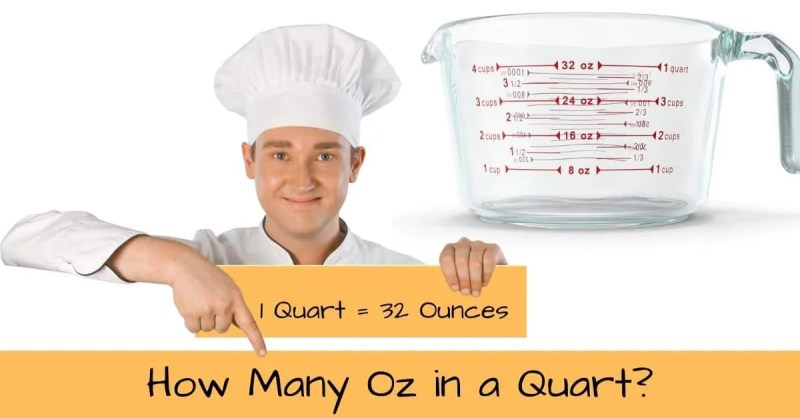
At its most fundamental level, a quart is a unit of volume, representing the amount of three-dimensional space an object or substance occupies. In the US customary system, a quart is defined as one-quarter of a gallon. Conversely, a pound is a unit of mass (or weight, in a gravitational context), representing the amount of matter present in an object. Because volume measures "how much space" and weight measures "how much stuff," the conversion between them requires a third variable: density.
When people ask how many lbs in a quart, they are essentially asking for the weight of a specific volume of a specific substance. Density is defined as mass divided by volume (ρ = m/V). Therefore, to find the weight of a quart, you must multiply the volume of one quart by the density of the substance you are measuring. This is why a recipe calling for a quart of heavy cream will weigh significantly more than a recipe calling for a quart of vegetable oil.
Historical Background and Evolution
The history of measurement is a saga of human attempts to standardize the chaos of the natural world. Historically, liquid measurements like the quart were often tied to physical vessels—standardized containers used in marketplaces to ensure fairness in trade. In medieval Europe, the "quart" varied wildly from one region to another, often based on the capacity of a specific local vessel. It wasn't until the formalization of the British Imperial system and the subsequent US Customary system that these units gained the mathematical rigor required for modern science.
Table of Contents
- The Complete Overview of Volume vs. Mass
- Historical Background and Evolution
- Core Mechanisms: How It Works
- Key Benefits and Crucial Impact
- Major Advantages of Accurate Conversion
- Comparative Analysis
- Future Trends and Innovations
- Conclusion
- Comprehensive FAQs
- Q: Why does a quart of water weigh differently depending on temperature?
- Q: Is there a quick way to estimate how many lbs in a quart of oil?
- Q: How do I convert quarts to pounds if I only know the density?
- Q: Does the type of quart (liquid vs. dry) change the weight?
The shift from volumetric trade to weight-based precision was driven by the Industrial Revolution. As manufacturing became more complex, the margin for error decreased. Relying on a "quart" of a substance that might be more or less dense due to temperature or purity became a liability. This led to the widespread adoption of standardized density tables, allowing engineers and scientists to calculate exactly how many lbs in a quart of a specific chemical or fuel with absolute certainty.
Core Mechanisms: How It Works
The mechanics of this conversion rely on the principle of specific gravity. Specific gravity is a dimensionless quantity that compares the density of a substance to the density of pure water. Since water is the universal benchmark for liquid measurement, it serves as the primary reference point. For most practical purposes, if you know the specific gravity of a liquid, you can easily determine its weight per unit of volume.
To perform the calculation, one must first convert the quart to a standard cubic measurement or use the known weight of a quart of water. In the US system, one quart of water weighs approximately 2.086 pounds at room temperature. If a substance has a specific gravity of 0.8 (like many oils), you simply multiply 2.086 by 0.8 to find the weight. This mathematical bridge is what allows us to answer the question of how many lbs in a quart for any given material.
Key Benefits and Crucial Impact
Understanding the conversion between volume and weight is not merely an academic exercise; it is a critical skill in several high-stakes industries. In the pharmaceutical sector, where dosage is measured in milligrams, even a slight misunderstanding of volume-to-mass ratios can lead to catastrophic errors. In the logistics and shipping industry, knowing the weight of liquid cargo is essential for calculating vessel stability and fuel consumption.
In the culinary world, the impact is felt in consistency and cost control. Professional bakeries and large-scale food manufacturers rarely use volume for critical ingredients; they use weight. However, when receiving shipments or utilizing liquid ingredients, they must frequently translate volume-based orders into weight-based inventory. Mastering this conversion ensures that the final product is identical every single time, regardless of the ambient temperature or the specific brand of ingredient used.
"Precision is the difference between a craft and a science. In measurement, there is no room for approximation when accuracy is the goal."
Major Advantages of Accurate Conversion
- Enhanced Recipe Consistency: Ensures that ingredients like milk or oil contribute the exact same mass to a mixture every time, regardless of volume variations.
- Cost Efficiency in Manufacturing: Allows businesses to purchase ingredients by weight (often cheaper) and utilize them by volume (often easier), maximizing profit margins.
- Logistical Accuracy: Enables shipping companies to calculate the exact weight of liquid containers, preventing overloaded vehicles or aircraft.
- Scientific Integrity: Provides the necessary data for chemical reactions where the molarity and mass of reactants are strictly controlled.
- Regulatory Compliance: Ensures that products sold by volume meet the legal weight requirements set by consumer protection agencies.

Comparative Analysis
To illustrate how the answer to "how many lbs in a quart" changes based on the substance, we must look at a comparison of common liquids. The following table demonstrates the variance in weight for a single quart of different substances.
| Substance | Approximate Weight (lbs) per Quart | Density Category |
|---|---|---|
| Water | 2.086 lbs | Standard Reference |
| Vegetable Oil | 1.85 - 1.90 lbs | Low Density |
| Whole Milk | 2.13 lbs | High Density |
| Honey | 3.15 lbs | Very High Density |
Future Trends and Innovations
As we look toward the future, the integration of smart technology into measurement is set to revolutionize how we handle volume and mass. We are seeing the rise of "smart containers" equipped with integrated sensors that can measure both the volume of a liquid and its density in real-time. These devices can instantly transmit data to a cloud-based system, calculating exactly how many lbs in a quart of the current contents and adjusting shipping manifests automatically.
Furthermore, the advancement of digital scales and volumetric sensors in automated manufacturing is reducing human error to near-zero levels. Artificial intelligence is being applied to predict density fluctuations caused by temperature changes in large-scale chemical vats. This predictive modeling allows for real-time adjustments in measurement, ensuring that the transition from volumetric measurement to weight-based output is seamless and incredibly precise.
Conclusion
In summary, determining how many lbs in a quart is not a matter of finding a single number, but rather understanding the relationship between volume and density. While water provides a convenient baseline of approximately 2.086 pounds per quart, the reality of the physical world dictates that every substance will behave differently. From the light, flowing nature of oils to the dense, viscous properties of honey, the weight of a quart is a variable, not a constant.
By mastering the principles of density and specific gravity, you equip yourself with a toolset that is invaluable in the kitchen, the laboratory, and the industrial warehouse. Whether you are a professional seeking perfection or a curious student of science, recognizing the distinction between how much space a substance takes up and how much it weighs is a fundamental step in understanding the physical world around us.
Comprehensive FAQs
Q: Why does a quart of water weigh differently depending on temperature?
A: Water is unique because its density changes with temperature. As water heats up, it expands, meaning the same volume (one quart) actually contains fewer molecules, thus weighing slightly less. Conversely, water is at its most dense near 4 degrees Celsius.
Q: Is there a quick way to estimate how many lbs in a quart of oil?
A: Yes. Most cooking oils are less dense than water. A reliable rule of thumb is to assume a quart of oil weighs approximately 1.85 to 1.9 pounds. This is roughly 10% less than the weight of a quart of water.
Q: How do I convert quarts to pounds if I only know the density?
A: The formula is simple: Weight = Volume × Density. First, ensure your volume is in the correct units to match your density. If you have the density in lbs per quart, simply multiply that number by one. If your density is in lbs per cubic inch, convert your quart to cubic inches first.
Q: Does the type of quart (liquid vs. dry) change the weight?
A: The term "quart" is used for both liquid and dry measurements, but the weight calculation remains the same: it depends on the substance. However, "dry quarts" are a specific unit of volume used for dry goods like berries or grains, and their weight will vary wildly based on the aeration and density of the solid material.
A: The most accurate method is to use a calibrated digital scale to measure the mass directly, rather than relying on volumetric conversions. In professional environments, weighing ingredients is always preferred over measuring them by volume to ensure maximum precision.
Leave a Comment
Comments are moderated before appearing. The data you submit is processed according to the Privacy Policy of cixa.org.