The Anatomy of Man: How Many Ribs Does a Guy Have?
The Biological Blueprint of the Human Thorax
The human skeletal system serves as the intricate scaffolding upon which our entire physical existence is built. Among the various components of this framework, the thoracic cage stands as one of the most vital protective structures. It is not merely a collection of bones, but a dynamic, flexible shield designed to safeguard the most sensitive organs of the body. When examining the fundamental architecture of the male body, a common question arises regarding the specific count of these skeletal elements: how many ribs does a guy have?
While the standard anatomical model provides a definitive answer, the reality of human biology is often characterized by subtle, fascinating variations. The rib cage is not a static, uniform cage for every individual; rather, it is a product of genetic coding and developmental processes that can result in minor deviations from the norm. Understanding the number of bones in the chest requires more than a simple numerical response; it necessitates an appreciation for the complexity of osteology and the nuances of human evolution.
For medical professionals, fitness enthusiasts, and students of biology alike, grasping the specifics of the thoracic structure is essential. Whether one is studying the mechanics of respiration or assessing the impact of a physical injury, knowing the standard configuration of the male rib cage provides a necessary baseline. This investigation moves beyond the surface-level query to explore the structural, historical, and biological factors that define the human chest cavity.
The Complete Overview of Human Rib Counts
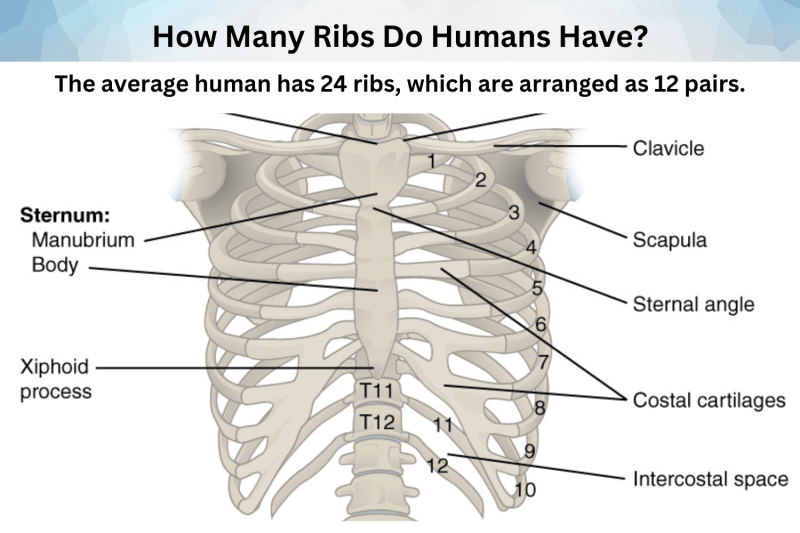
In the vast majority of the population, the answer to how many ribs does a guy have is twenty-four. This total is comprised of twelve pairs of bones that wrap around the thoracic cavity. These pairs are categorized based on how they attach to the sternum, or breastbone, which is the central anchor of the chest. The first seven pairs are known as true ribs because they connect directly to the sternum via costal cartilage. The next three pairs are termed false ribs, as they attach indirectly to the sternum through the cartilage of the preceding ribs. Finally, the last two pairs are referred to as floating ribs, as they do not attach to the sternum at all, providing flexibility and space for abdominal organs.
Despite this standard, biological diversity means that "twenty-four" is a statistical average rather than an absolute rule for every single male on the planet. Anatomical variations, such as the presence of a cervical rib, can alter the expected count. These extra bones, located in the neck area, are remnants of evolutionary history and can sometimes lead to medical conditions like Thoracic Outlet Syndrome. Therefore, while the standard count remains the benchmark, the study of the male skeleton must account for these individual idiosyncrasies that distinguish one person's anatomy from another.
Historical Background and Evolution
The evolution of the human rib cage is a testament to the shifting priorities of mammalian survival. In our ancestral lineage, the thoracic structure had to balance two competing needs: maximum protection for the heart and lungs, and maximum mobility for movement and foraging. As hominids transitioned to bipedalism, the orientation and shape of the ribs underwent significant changes. The rib cage became more compact and barrel-shaped compared to our quadrupedal ancestors, allowing for better upright stability and more efficient breathing patterns during sustained physical activity.
Historically, the study of these bones has been a cornerstone of anatomical science. From the early dissections performed during the Renaissance to modern radiological imaging, the quest to map the human frame has revealed much about our shared heritage. Early anatomists often struggled with the variations they encountered, sometimes misidentifying them as errors in nature rather than natural diversity. Today, we understand that the slight variations in the number of ribs are not "mistakes" but are instead part of the complex mosaic of human genetic expression and evolutionary leftovers.
Table of Contents
- The Biological Blueprint of the Human Thorax
- The Complete Overview of Human Rib Counts
- Historical Background and Evolution
- Core Mechanisms: How It Works
- Key Benefits and Crucial Impact
- Major Advantages of the Thoracic Structure
- Comparative Analysis
- Future Trends and Innovations
- Conclusion
- Comprehensive FAQs
- Q: Can a man have more than 24 ribs?
- Q: Do women have a different number of ribs than men?
- Q: What happens if a rib is broken?
- Q: What is the purpose of the floating ribs?
- Q: Can you feel your ribs through your skin?
Core Mechanisms: How It Works
The primary function of the ribs is to facilitate the mechanics of respiration. The rib cage does not act as a rigid box; instead, it functions as a bellows. When a man inhales, the intercostal muscles—the small muscles located between each rib—contract, lifting the ribs upward and outward. This expansion increases the volume of the thoracic cavity, creating a vacuum that pulls air into the lungs. This rhythmic expansion and contraction are made possible by the elasticity of the costal cartilage, which connects the bones to the sternum.
Beyond breathing, the rib cage provides essential structural support for the upper body. It acts as a protective enclosure for the heart, lungs, esophagus, and major blood vessels. The arrangement of the ribs also provides attachment points for numerous muscles, including the diaphragm, the pectorals, and the serratus anterior. This integration of bone and muscle ensures that the chest can withstand external pressure and impact while maintaining the internal pressure necessary for life-sustaining physiological processes.

Key Benefits and Crucial Impact
The structural integrity provided by the rib cage has profound implications for overall health and physical capability. A well-formed thoracic cage is not just about protection; it is about the efficiency of every breath taken and every movement made. The way the ribs are structured influences the posture of the spine, the capacity of the lungs, and the ability of the core muscles to stabilize the torso during heavy lifting or athletic performance.
For men involved in high-impact sports or heavy strength training, the resilience of the rib cage is a critical factor. The ability of the ribs to absorb shock and distribute force prevents internal organ damage during collisions or falls. Furthermore, the relationship between the ribs and the diaphragm is central to core stability, influencing everything from running gait to the prevention of lower back pain. Understanding this anatomy allows for better training methodologies and injury prevention strategies.
"The human skeleton is not a static monument, but a living, breathing architecture that adapts to the demands of life and the nuances of our genetic code."
Major Advantages of the Thoracic Structure
- Organ Protection: Provides a high-strength shield for the heart and lungs against blunt force trauma.
- Respiratory Efficiency: Facilitates the expansion and contraction necessary for deep, rhythmic breathing.
- Muscle Attachment: Offers a stable framework for the muscles of the chest, back, and abdomen.
- Structural Support: Maintains the shape of the torso and supports the weight of the upper body.
- Flexibility: The inclusion of costal cartilage allows for movement and torsion without fracturing the bone.
Comparative Analysis
To better understand how the standard rib count compares to common anatomical variations, we can examine the following breakdown of thoracic configurations.
| Rib Type | Connection to Sternum | Primary Function |
|---|---|---|
| True Ribs (1-7) | Direct via cartilage | Primary protection and breathing |
| False Ribs (8-10) | Indirect via cartilage | Structural stability and volume |
| Floating Ribs (11-12) | No connection | Flexibility and organ clearance |
| Cervical Ribs (Variation) | Attached to C7 vertebra | Evolutionary remnant (can cause issues) |

Future Trends and Innovations
As we look toward the future of medical science, the understanding of skeletal variations is becoming increasingly personalized. The rise of 3D skeletal modeling and advanced AI-driven radiology is allowing clinicians to map an individual's specific anatomy with unprecedented precision. In the future, instead of asking a general question like "how many ribs does a guy have," medical professionals will be able to provide a digital twin of a patient's specific rib cage, identifying every unique variation and its potential impact on health.
Furthermore, innovations in regenerative medicine and bio-printing are opening new doors for treating rib fractures and congenital deformities. We are moving toward an era where synthetic, biocompatible scaffolds can be printed to perfectly match a patient's unique thoracic geometry. This level of customization will not only improve surgical outcomes but also revolutionize how we approach trauma recovery and the treatment of rare skeletal anomalies.
Conclusion
In summary, while the standard answer to how many ribs does a guy have is twenty-four, the true answer lies in the beautiful complexity of human biology. The twelve pairs of ribs—true, false, and floating—form a sophisticated system that protects our most vital organs while enabling the very act of breathing. This structural masterpiece is a perfect balance of strength and flexibility, designed through millennia of evolution to support the demands of human life.
Recognizing the variations in the human frame, such as the presence of extra ribs or differences in cartilage attachment, is essential for a complete understanding of anatomy. Whether viewed through the lens of evolutionary history, medical science, or physical performance, the rib cage remains one of the most impressive feats of biological engineering. It is a reminder that while we share a common blueprint, the individual expression of that blueprint is what makes human anatomy so endlessly fascinating.
Comprehensive FAQs
Q: Can a man have more than 24 ribs?
A: Yes, it is possible. While 24 is the standard, some individuals possess an extra rib, commonly known as a cervical rib, which originates from the seventh cervical vertebra in the neck. This is a recognized anatomical variation.
Q: Do women have a different number of ribs than men?
A: Generally, no. The standard number of ribs for both males and females is twenty-four. While there may be slight differences in the shape or width of the rib cage due to sexual dimorphism, the count remains the same in most cases.
Q: What happens if a rib is broken?
A: A broken rib can cause significant pain, especially during breathing, coughing, or twisting. While many rib fractures heal on their own with rest and pain management, severe breaks can potentially damage underlying organs like the lungs, requiring medical intervention.
Q: What is the purpose of the floating ribs?
A: Floating ribs (the 11th and 12th pairs) do not attach to the sternum. Their lack of attachment provides the lower torso with greater flexibility and prevents the rib cage from being too rigid, which is important for movement and the expansion of the abdominal area.
Q: Can you feel your ribs through your skin?
A: Yes, especially in individuals with lower body fat percentages. The ribs are located just beneath the skin and muscle layers of the chest, and the edges of the bone can often be felt through palpation.
Leave a Comment
Comments are moderated before appearing. The data you submit is processed according to the Privacy Policy of cixa.org.