Precision Logic: How to Multiply Using Decimals with Ease
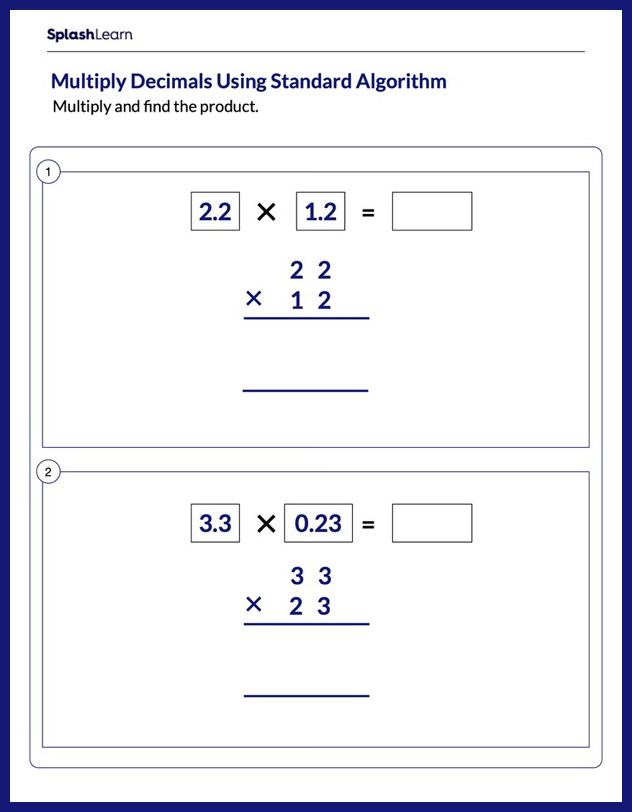
Precision in Numbers: The Logic of Decimal Multiplication
Mathematical proficiency serves as the silent engine behind modern commerce, scientific inquiry, and architectural integrity. While basic arithmetic often feels intuitive, the introduction of fractional components through decimal notation introduces a layer of complexity that requires disciplined procedural knowledge. Understanding how to multiply using decimals is not merely an academic exercise; it is a fundamental requirement for anyone navigating a world defined by precision, from managing personal finances to calculating chemical concentrations in a laboratory.
The transition from whole number multiplication to decimal operations represents a significant cognitive leap. It requires a shift from simple counting to an understanding of place value and positional notation. When we multiply decimals, we are essentially scaling values that exist between the integers. This process demands a rigorous adherence to specific rules regarding the placement of the decimal point, ensuring that the magnitude of the product remains consistent with the input values.
Errors in this domain are rarely the result of poor multiplication itself, but rather a failure to respect the decimal's position. A misplaced point can transform a minor calculation error into a catastrophic financial or scientific discrepancy. Therefore, developing a systematic approach to decimal multiplication is essential for maintaining accuracy in any quantitative task. This guide examines the mechanics, history, and application of these operations to build a robust foundation in decimal arithmetic.
The Complete Overview of Decimal Multiplication
At its essence, the process of multiplying decimals is an extension of standard integer multiplication, modified by a specific rule for determining the final magnitude. The primary objective is to treat the numbers as whole integers initially, ignoring the decimal points entirely during the primary calculation phase. Once the product of these integers is found, the decimal point is reintroduced based on the total number of decimal places present in the original factors. This method ensures that the relative scale of the numbers is preserved throughout the operation.
To master how to multiply using decimals, one must internalize the concept of place value. Each digit's position relative to the decimal point dictates its value—tenths, hundredths, thousandths, and so on. When two decimal numbers are multiplied, the number of decimal places in the product is always the sum of the decimal places in the two numbers being multiplied. For instance, multiplying a number with one decimal place by a number with two decimal places will invariably result in a product with three decimal places.
Historical Background and Evolution
The development of decimal notation and the subsequent ability to perform complex multiplication with fractional parts can be traced back through centuries of mathematical evolution. Early civilizations used various methods to represent parts of a whole, such as the sexagesimal system used in ancient Mesopotamia or the fractional systems of Egypt. However, the modern decimal system, which relies on a base-10 positional notation, gained significant traction through the works of mathematicians in India and later through the widespread adoption of Hindu-Arabic numerals in Europe during the Renaissance.
The formalization of decimal multiplication as a standardized procedure was driven by the necessity of the Scientific Revolution and the rise of global trade. As merchants required more precise ways to calculate interest, currency exchanges, and weights, and as astronomers needed to measure celestial movements with extreme accuracy, the ability to manipulate decimal fractions became a cornerstone of mathematical literacy. The evolution from manual abacus-based calculations to the structured long multiplication algorithms used today reflects a broader human pursuit of systematic precision.
Table of Contents
- Precision in Numbers: The Logic of Decimal Multiplication
- The Complete Overview of Decimal Multiplication
- Historical Background and Evolution
- Core Mechanisms: How It Works
- Key Benefits and Crucial Impact
- Major Advantages
- Comparative Analysis
- Future Trends and Innovations
- Conclusion
- Comprehensive FAQs
- Q: Why do I need to count the decimal places after multiplying?
- Q: What happens if I misplace the decimal point in my answer?
- Q: Can I use estimation to check my work?
- Q: Is multiplying decimals the same as multiplying fractions?
- Q: How do I multiply a decimal by a whole number?
Core Mechanisms: How It Works
The mechanical execution of decimal multiplication follows a strict three-step protocol. First, the practitioner must remove the decimal points from the factors, effectively converting them into whole numbers. For example, if calculating 0.45 multiplied by 1.2, one would treat the problem as 45 multiplied by 12. This simplification allows the brain to utilize standard multiplication algorithms without the distraction of fractional notation. The second step involves performing the multiplication of these whole numbers using traditional long multiplication or distributive methods.
The final and most critical step is the "re-insertion" of the decimal point. To do this correctly, one must count the total number of digits to the right of the decimal points in both original factors. In our previous example, 0.45 has two decimal places and 1.2 has one decimal place, totaling three. The product of 45 and 12 is 540. By moving the decimal point three places to the left in 540, we arrive at the correct result: 0.540, or 0.54. This systematic approach minimizes the risk of magnitude errors.

Key Benefits and Crucial Impact
The ability to execute decimal multiplication with confidence provides a significant advantage in both professional and personal spheres. In a professional context, precision in decimal calculations is the difference between a successful engineering project and a structural failure, or between a profitable investment and a significant loss. Professionals in fields such as pharmacology, where dosages are calculated in minute decimal increments, rely on these skills to ensure safety and efficacy.
On a personal level, proficiency in decimal arithmetic empowers individuals to manage their lives with greater autonomy. Whether calculating sales tax, determining the unit price of groceries, or understanding the interest rates on a mortgage, the capacity to handle decimals ensures that one is not misled by complex numbers. It fosters a sense of quantitative literacy that is indispensable in the modern economy.
"Mathematics is the language in which God has written the universe, and precision in its application is the key to unlocking its secrets."
Major Advantages
- Enhanced Accuracy in Financial Planning: Precise decimal multiplication allows for exact budgeting, interest calculations, and tax estimations, preventing cumulative errors in long-term financial models.
- Scientific Reliability: In laboratory settings, the ability to multiply decimal concentrations and volumes ensures the reproducibility of experiments and the safety of chemical reactions.
- Engineering Precision: Structural and mechanical integrity depends on the ability to work with minute decimal measurements, ensuring that components fit together within microscopic tolerances.
- Improved Analytical Thinking: Learning the systematic steps of decimal multiplication strengthens overall logical reasoning and the ability to follow complex, multi-step procedures.
- Data Interpretation Skills: Proficiency in decimals aids in the understanding of statistical data, percentages, and probabilities, which are essential for making informed decisions in a data-driven world.
Comparative Analysis
| Method Type | Complexity Level | Primary Use Case |
|---|---|---|
| Whole Number Conversion | Low to Moderate | Standard manual calculation for most academic and daily tasks. |
| Fractional Conversion | Moderate to High | Used when decimal numbers are easily represented as simple fractions. |
| Estimation/Rounding | Low | Quick mental checks to verify the reasonableness of a product. |
| Algorithmic/Software | Minimal (Automated) | High-speed, high-volume computations in computing and data science. |

Future Trends and Innovations
As we move further into the era of artificial intelligence and automated computation, the manual requirement for knowing how to multiply using decimals may seem to diminish. However, the underlying logic remains more relevant than ever. As AI systems handle the "brute force" of calculation, the human role is shifting toward the verification of algorithmic outputs. Understanding the fundamental mechanics of decimal multiplication allows professionals to audit automated systems and identify "hallucinations" or errors in computational logic.
Furthermore, the rise of quantum computing and advanced data modeling is pushing the boundaries of decimal precision. We are seeing a move toward "arbitrary-precision arithmetic," where computers can handle decimals with thousands of digits of accuracy. While the tools are becoming more sophisticated, the conceptual framework of place value and decimal positioning remains the bedrock upon which these advanced technologies are built. The future belongs to those who can bridge the gap between intuitive understanding and high-level computational logic.
Conclusion
Mastering the ability to multiply using decimals is a foundational skill that transcends the classroom. It is a discipline of precision that informs how we interact with the physical and financial worlds. By understanding the relationship between whole numbers and their fractional counterparts, and by strictly adhering to the rules of decimal placement, one can navigate complex quantitative landscapes with absolute certainty.
Ultimately, the study of decimal multiplication is a study of order and logic. It teaches us that even the smallest digit, when placed correctly, can change the entire magnitude of a result. As you continue to refine your mathematical skills, remember that accuracy is not just about getting the right answer, but about respecting the systematic rules that govern the mathematical universe.
Comprehensive FAQs
Q: Why do I need to count the decimal places after multiplying?
A: Counting the decimal places is the mechanism used to restore the correct magnitude to your product. Since you initially treat the numbers as whole integers to simplify the multiplication, the decimal point is temporarily removed. Re-counting and re-inserting the decimal point based on the total number of decimal places in the original factors ensures that the scale of the answer is mathematically accurate.
Q: What happens if I misplace the decimal point in my answer?
A: Misplacing the decimal point results in a magnitude error. If you move it one place too far to the left, your answer will be ten times smaller than it should be; if you move it one place too far to the right, it will be ten times larger. In real-world applications like medicine or finance, such an error can have severe consequences.
Q: Can I use estimation to check my work?
A: Yes, estimation is a highly effective way to verify your results. Round your decimal factors to the nearest whole number and perform a quick multiplication. If your calculated product is significantly different from your estimated product, you likely made an error in either your multiplication or your decimal placement.
Q: Is multiplying decimals the same as multiplying fractions?
A: Conceptually, yes, because decimals are simply another way to represent fractions. However, the procedural steps differ. To multiply fractions, you multiply the numerators and then the denominators. To multiply decimals, you typically use the whole-number multiplication method followed by decimal placement. Both methods yield the same logical result.
Q: How do I multiply a decimal by a whole number?
A: The process is nearly identical. Treat the whole number as a decimal with a ".0" at the end (e.g., 5 becomes 5.0). Multiply as you would with two decimals, or simply multiply the whole number by the digits of the decimal and then place the decimal point in the product based on how many decimal places were in the original decimal factor.
Leave a Comment
Comments are moderated before appearing. The data you submit is processed according to the Privacy Policy of cixa.org.