The Art of Professional Branding: How to Write a Resume That Wins
A resume is far more than a mere list of previous job titles and dates; it is a high-stakes marketing document designed to sell a specific professional identity. In a competitive global economy, your ability to communicate value quickly and effectively determines whether you pass the initial screening or vanish into the digital void. The document serves as the bridge between your past achievements and your future potential, acting as the primary instrument of persuasion in the recruitment process.
Precision is the hallmark of a successful application. Most hiring managers spend less than ten seconds performing an initial scan of a candidate's profile. During this brief window, the document must convey a clear narrative of competence, progression, and specialized expertise. If the structure is chaotic or the content is vague, even the most qualified professional will find themselves overlooked. Consequently, understanding the nuances of how to write a resume becomes a fundamental skill for any serious career strategist.
The modern landscape of recruitment has also introduced a layer of technical complexity: the Applicant Tracking System (ATS). This software acts as a gatekeeper, filtering candidates based on keyword relevance and structural integrity before a human eye ever sees the file. To succeed, one must balance the aesthetic requirements of human readers with the algorithmic requirements of machine scanners. This dual-purpose approach requires a blend of psychological insight and technical literacy.

The Complete Overview of Professional Document Construction
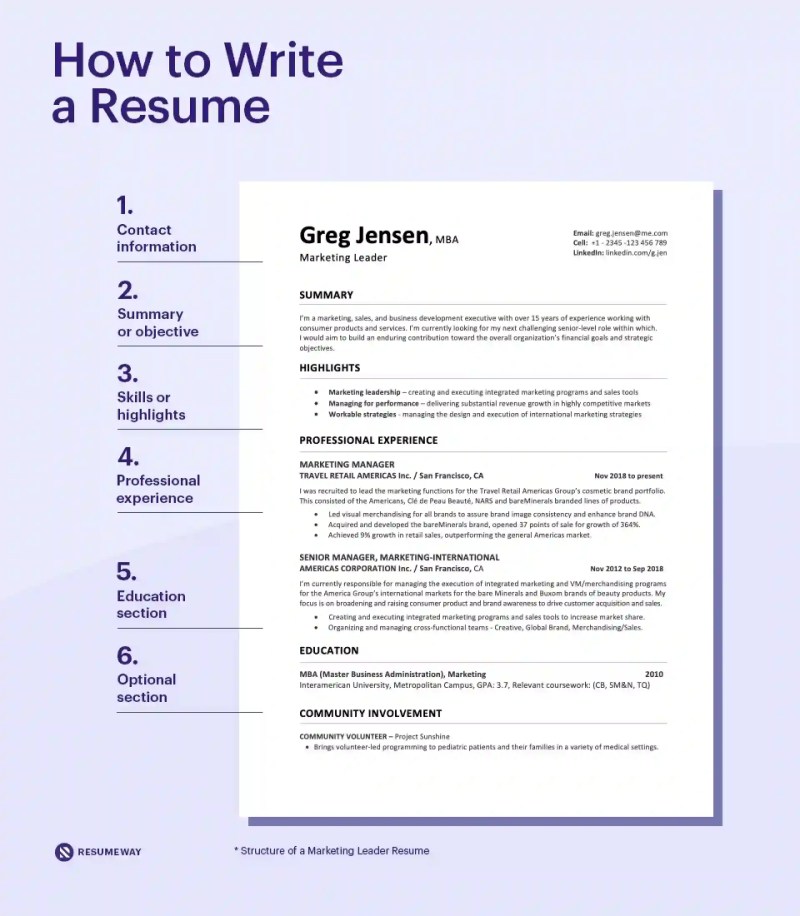
Constructing a high-impact professional profile requires a strategic approach to information hierarchy. You are not merely documenting history; you are curating an experience. Every bullet point, every skill listed, and every line of white space must serve a specific purpose: to prove that you are the solution to a company's specific problem. This means moving away from passive descriptions of duties and moving toward active demonstrations of impact.
When people ask how to write a resume that stands out, the answer lies in the transition from a "responsibility-based" mindset to an "achievement-based" mindset. Instead of stating that you "managed a team," a sophisticated candidate explains how they "optimized team workflows to increase quarterly output by 15%." This shift from what you did to what you achieved is the single most important distinction in modern professional writing.
Historical Background and Evolution
The concept of a formal summary of qualifications has evolved significantly since its inception. In the early 20th century, professional summaries were often brief, handwritten, or typed letters of introduction that focused heavily on character and social standing. As the industrial era gave way to the corporate age, these documents became more standardized, emphasizing formal education and steady employment history. The focus was on stability and pedigree rather than specific, measurable accomplishments.
Table of Contents
- The Complete Overview of Professional Document Construction
- Historical Background and Evolution
- Core Mechanisms: How It Works
- Key Benefits and Crucial Impact
- Major Advantages
- Comparative Analysis
- Future Trends and Innovations
- Conclusion
- Comprehensive FAQs
- Q: How long should my resume be for a mid-level professional?
- Q: Should I include a professional summary or an objective statement?
- Q: How do I handle gaps in my employment history?
- Q: Can I use a creative layout for my resume?
- Q: How often should I update my resume?
The digital revolution of the late 1990s and early 2000s fundamentally altered the DNA of the job application. The rise of the internet introduced the concept of the digital footprint, and eventually, the rise of automated screening software. This shift forced a move toward standardized formatting and keyword optimization. Today, we are seeing a third wave of evolution: the era of personal branding, where the document must function as a cohesive piece of a larger professional identity that includes LinkedIn profiles, portfolios, and digital thought leadership.
Core Mechanisms: How It Works
The mechanism of a successful application functions on two distinct levels: the algorithmic and the cognitive. On the algorithmic level, the document must be parsed correctly by software. This involves using standard headings, avoiding complex graphics that confuse scanners, and incorporating industry-specific terminology. If the machine cannot read your data, the human will never see your talent. This technical layer is the foundation upon which all subsequent success is built.
On the cognitive level, the document must engage the human brain through pattern recognition and social proof. Humans look for "anchors"—specific names of prestigious institutions, recognizable software proficiencies, or impressive numerical data. By placing these anchors strategically within the layout, you guide the reader's eye toward your most significant strengths. A well-engineered document uses visual hierarchy to ensure that the most impressive information is seen first, reducing the cognitive load on the recruiter.
Key Benefits and Crucial Impact
A meticulously crafted document provides a significant competitive advantage. It does more than just secure an interview; it sets the tone for the entire interview process. When you present a document that is clear, concise, and data-driven, you signal to the employer that you possess high levels of organization, communication skills, and attention to detail—traits that are universally valued across all industries.
Furthermore, the process of learning how to write a resume forces a period of deep professional reflection. To write a compelling narrative, you must audit your own career, identify your most significant contributions, and quantify your value. This self-assessment is invaluable, as it prepares you for the verbal storytelling required during the interview stage, ensuring that your spoken words align perfectly with your written claims.
"Your professional summary is not a history lesson; it is a pitch for your future. If you focus on where you have been rather than where you can go, you have already lost the room."
Major Advantages
- Enhanced Brand Perception: Establishes an immediate sense of authority and professionalism in the eyes of the recruiter.
- Algorithmic Compatibility: Increases the probability of bypassing automated filters and reaching human decision-makers.
- Value Quantification: Forces the translation of vague duties into measurable, high-impact achievements.
- Strategic Narrative Control: Allows the candidate to frame their career trajectory in a way that emphasizes growth and relevance.
- Interview Preparation: Serves as a structured roadmap for the conversations that will follow the initial screening.
Comparative Analysis
| Feature | Traditional Approach | Modern Strategic Approach |
|---|---|---|
| Focus | Job Duties and Responsibilities | Quantifiable Achievements and Impact |
| Structure | Chronological List | Hybrid/Functional Value-Driven |
| Optimization | Visual Appeal Only | ATS Keyword & Human Cognitive Optimization |
| Tone | Passive and Descriptive | Active and Results-Oriented |
Future Trends and Innovations
The future of professional documentation is moving toward hyper-personalization and multi-modal presentation. As artificial intelligence becomes more integrated into the hiring process, we will likely see the rise of "dynamic resumes"—digital profiles that can adapt their emphasis based on the specific role being applied for. While the core principles of honesty and clarity will remain, the medium through which we present our professional value will become increasingly interactive.
Additionally, there is a growing trend toward "skills-based hiring" rather than "pedigree-based hiring." This shift means that future documents will place even less emphasis on where someone went to school and significantly more emphasis on verified competencies and demonstrated project outcomes. The ability to prove a skill through data, portfolio links, or third-party validation will become the new gold standard in professional storytelling.

Conclusion
Mastering the art of how to write a resume is an investment in your long-term career capital. It is a skill that, once acquired, pays dividends every time you seek a promotion, a lateral move, or a complete industry pivot. By treating your professional history as a strategic asset rather than a mere administrative requirement, you position yourself as a high-value candidate in an increasingly crowded marketplace.
Ultimately, the most successful documents are those that balance technical precision with human resonance. Do not settle for a generic template that fails to capture your unique value proposition. Instead, approach the task with the mindset of a strategist: analyze your audience, optimize your content for the medium, and present a compelling case for why your presence is essential to the organization's success.
Comprehensive FAQs
Q: How long should my resume be for a mid-level professional?
A: For most mid-level professionals, a two-page document is the industry standard. This allows enough space to detail significant achievements and technical skills without overwhelming the reader. However, if you are in academia or a highly technical research field, a longer Curriculum Vitae (CV) may be appropriate.
Q: Should I include a professional summary or an objective statement?
A: In the modern job market, the professional summary has largely replaced the objective statement. An objective statement tells the employer what you want; a professional summary tells the employer what you can do for them. Focus on your value proposition rather than your personal goals.
Q: How do I handle gaps in my employment history?
A: Gaps are increasingly common and do not need to be hidden. The best approach is to address them briefly and focus on what you did during that time—such as freelance work, professional development, certifications, or even significant personal projects. Honesty, combined with a focus on continuous learning, is the most professional route.
Q: Can I use a creative layout for my resume?
A: This depends entirely on your industry. If you are applying for a role in graphic design or a creative agency, a unique layout can demonstrate your skills. However, for corporate roles in finance, law, or administration, a clean, traditional, and ATS-friendly format is much safer and more effective.
Q: How often should I update my resume?
A: You should treat your resume as a living document. Even if you are not actively looking for a new role, you should update it every six months to capture new achievements, skills, and responsibilities. This ensures that when an opportunity does arise, you are prepared to respond immediately with an accurate and impactful document.
Leave a Comment
Comments are moderated before appearing. The data you submit is processed according to the Privacy Policy of cixa.org.