How to js get distance between two numbers efficiently
The Mathematical Precision of JavaScript Logic
Computational mathematics often boils down to the simplest of operations: finding the gap between two points. In the realm of software engineering, specifically when working with JavaScript, the requirement to js get distance between two numbers is a fundamental building block for everything from UI animations to complex data visualization. Whether you are calculating the delta between two timestamps or determining the proximity of a user's mouse cursor to a specific element, the logic remains a constant necessity.
While the concept of "distance" seems intuitive to a human, a computer requires explicit instructions to interpret the relationship between two numerical values. The challenge is not merely performing subtraction, but ensuring that the result is always a positive scalar value, regardless of which number is larger. This nuance is what separates a novice programmer from an engineer capable of writing robust, production-ready code that accounts for the directional indifference of distance.
As web applications become increasingly interactive, the demand for efficient arithmetic operations grows. High-frequency calculations, such as those found in game loops or real-time data streaming, require developers to understand the most performant way to execute these tasks. This article examines the technical implementation, the underlying mathematical principles, and the best practices for calculating numerical intervals within the JavaScript ecosystem.
The Complete Overview of js get distance between two numbers
At its most basic level, finding the distance between two values involves calculating the absolute difference. In mathematical terms, if we have two points, $a$ and $b$, the distance is expressed as $|a - b|$. In a programming context, the instruction to js get distance between two numbers is most commonly fulfilled by utilizing the built-in Math object provided by the ECMAScript standard. The Math.abs() method is the industry standard for this operation, as it strips away the negative sign that naturally occurs when a smaller number is subtracted from a larger one.
Beyond simple integers, this operation extends to floating-point numbers, which introduces the concept of precision and rounding errors. When developers attempt to find the distance between decimal values, they must be wary of how JavaScript handles IEEE 754 floating-point arithmetic. A calculation that appears correct on paper might yield a minute error in the console, such as 0.30000000000000004 instead of 0.3. Understanding how to manage these infinitesimal discrepancies is vital for any professional working with financial data or high-precision scientific simulations.
Historical Background and Evolution
The history of numerical computation in web browsers has evolved from simple arithmetic engines to highly optimized JIT (Just-In-Time) compiled environments. In the early days of JavaScript, mathematical operations were relatively slow, and developers often had to write custom logic to handle basic arithmetic tasks. The need to js get distance between two numbers was often handled via conditional statements (if/else) to manually ensure a positive result, a method that was both verbose and computationally expensive compared to modern standards.
As the ECMAScript specification matured, the standardization of the Math object provided a unified, highly optimized way to perform these calculations. The evolution of the V8 engine and other modern JavaScript engines has meant that operations like Math.abs() are now often implemented as intrinsic functions at the assembly level. This means that when you call the function to determine the numerical gap, the engine is performing the operation with near-hardware-level efficiency, allowing for the massive scale of modern web applications.
Table of Contents
- The Mathematical Precision of JavaScript Logic
- The Complete Overview of js get distance between two numbers
- Historical Background and Evolution
- Core Mechanisms: How It Works
- Key Benefits and Crucial Impact
- Major Advantages
- Comparative Analysis
- Future Trends and Innovations
- Conclusion
- Comprehensive FAQs
- Q: What is the simplest way to js get distance between two numbers in JavaScript?
- Q: Why do I get unexpected results when calculating distance with decimals?
- Q: Can I use the conditional operator instead of Math.abs()?
- Q: How do I calculate the distance between two numbers in a 2D plane?
- Q: Does the order of subtraction matter when finding the distance?
Core Mechanisms: How It Works
The primary mechanism for calculating the difference between two points in JavaScript is the subtraction operator (-) paired with the absolute value function. When you execute a command to js get distance between two numbers, the engine first computes the arithmetic difference. If the first operand is smaller than the second, the result is a negative number. The Math.abs() function then intercepts this result, applying a bitwise or logical transformation to ensure the sign bit is set to zero, effectively returning the magnitude of the difference.
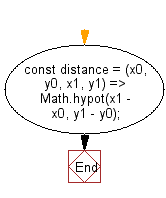
For more complex scenarios, such as calculating distances in a multi-dimensional space (like Euclidean distance in a 2D plane), the mechanism expands. Instead of a simple subtraction, the developer must apply the Pythagorean theorem: the square root of the sum of the squares of the differences between the coordinates. While the core logic remains rooted in the ability to find the distance between two numbers on a single axis, the integration of these single-axis calculations allows for the construction of sophisticated spatial algorithms used in modern graphics libraries.

Key Benefits and Crucial Impact
Implementing a standardized approach to calculating numerical intervals provides significant stability to a codebase. When every developer on a team uses a consistent method to js get distance between two numbers, the predictability of the application increases. This consistency is particularly important when these calculations drive visual elements, such as the movement of a progress bar or the scaling of an image during a zoom interaction.
Furthermore, the impact of optimized mathematical logic extends to the user experience. In high-performance environments, such as browser-based gaming or real-time collaborative tools, even a few milliseconds of overhead in calculation can lead to "jank" or dropped frames. By utilizing the most efficient methods to determine numerical proximity, developers ensure that the application remains fluid and responsive, even under heavy computational loads.
"Precision in logic is the foundation of reliability in software; a single miscalculated delta can cascade into a systemic failure."
Major Advantages
- Computational Efficiency: Using built-in Math methods ensures that the engine uses optimized, low-level instructions.
- Code Readability: A clear implementation of the distance formula makes the intent of the code immediately obvious to other engineers.
- Mathematical Accuracy: Utilizing Math.abs() prevents logic errors caused by unexpected negative results in directional calculations.
- Scalability: Standardized methods allow for easy refactoring when moving from 1D scalar distances to multi-dimensional vector math.
- Reduced Debugging: A predictable approach to finding the difference between values minimizes the risk of "off-by-one" errors or sign-related bugs.
Comparative Analysis
| Methodology | Complexity | Use Case | Performance |
|---|---|---|---|
| Math.abs(a - b) | O(1) | Standard 1D distance | Highest |
| Conditional (if/else) | O(1) | Legacy environments | Moderate |
| Euclidean (2D/3D) | O(n) | Spatial/Graphics | Lower |
| BigInt Subtraction | O(1) | Large integer precision | Variable |

Future Trends and Innovations
As we look toward the future of web computing, the way we handle numerical operations is being shaped by the rise of WebAssembly (Wasm). While JavaScript remains the primary language of the web, highly intensive mathematical tasks—such as those requiring the distance between millions of points in a 3D cloud—are increasingly being offloaded to Wasm modules. This allows developers to write logic in languages like C++ or Rust and execute it in the browser with near-native performance, effectively augmenting the standard ways we js get distance between two numbers.
Additionally, the integration of Machine Learning (ML) directly into the browser via TensorFlow.js is changing the nature of numerical proximity. We are moving from simple arithmetic distance to "semantic distance," where algorithms calculate how close two data points are based on complex patterns rather than just raw values. This shift will require even more sophisticated mathematical toolsets, blending traditional arithmetic with high-dimensional vector calculus, all while maintaining the speed and efficiency that modern users demand.
Conclusion
Mastering the ability to js get distance between two numbers is more than a trivial task; it is a fundamental requirement for any developer seeking to build professional-grade software. From the simple application of Math.abs() to the complex implementation of spatial algorithms, understanding the nuances of numerical differences is essential for ensuring accuracy, performance, and code maintainability.
As the web continues to evolve into a platform for high-performance applications, the importance of mathematical precision will only grow. By adhering to best practices, understanding the underlying engine optimizations, and remaining aware of emerging technologies like WebAssembly, engineers can write code that is not only functional but also exceptionally robust and scalable. Whether you are working on a simple utility or a complex simulation, the logic of distance remains a cornerstone of computational excellence.
Comprehensive FAQs
Q: What is the simplest way to js get distance between two numbers in JavaScript?
A: The most efficient and common method is to use the Math.abs() function combined with the subtraction operator. For example: const distance = Math.abs(num1 - num2); This ensures the result is always a positive number.
Q: Why do I get unexpected results when calculating distance with decimals?
A: This is due to floating-point precision issues inherent in the IEEE 754 standard used by JavaScript. To fix this, you can use the .toFixed() method to round the result to a specific number of decimal places or use a small epsilon value for comparisons.
Q: Can I use the conditional operator instead of Math.abs()?
A: Yes, you can use a ternary operator like `const distance = num1 > num2 ? num1 - num2 : num2 - num1;`. However, Math.abs() is generally preferred because it is more readable and highly optimized by modern JavaScript engines.
Q: How do I calculate the distance between two numbers in a 2D plane?
A: To find the distance between two points (x1, y1) and (x2, y2), you should use the Euclidean distance formula: Math.sqrt(Math.pow(x2 - x1, 2) + Math.pow(y2 - y1, 2)).
Q: Does the order of subtraction matter when finding the distance?
A: When using Math.abs(), the order does not matter because the absolute value function will convert any negative result into its positive counterpart. Both (a - b) and (b - a) will yield the same distance.
Leave a Comment
Comments are moderated before appearing. The data you submit is processed according to the Privacy Policy of cixa.org.