Understanding the Dynamics of an Open vs Closed System
The architecture of existence is defined by boundaries. Whether examining the microscopic movement of molecules within a vacuum or the macroscopic flow of capital within a globalized economy, the distinction between permeability and isolation dictates the fate of the entity in question. To understand the fundamental mechanics of how things function, one must first grasp the distinction between an open vs closed system.
In the realm of physics, these classifications determine how energy and matter interact with their surroundings. In biology, they dictate the survival of an organism. In software engineering and business management, they define the limits of scalability and interoperability. The choice between maintaining a walled garden or an interconnected network is rarely a matter of simple preference; it is a strategic decision that influences entropy, growth, and long-term sustainability.
This analysis moves beyond surface-level definitions to explore the profound implications of systemic boundaries. By examining the structural differences, we can better understand why certain structures thrive through exchange while others find stability through containment. Understanding these dynamics provides a lens through which we can interpret the complexity of the modern world, from the silicon chips in our pockets to the ecosystems that sustain life on Earth.
The Complete Overview of Open vs Closed System Dynamics
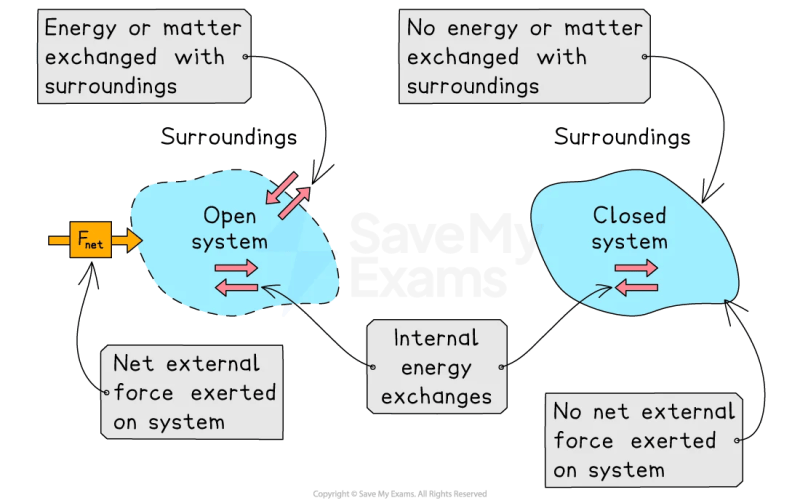
At its most fundamental level, the debate of an open vs closed system centers on the exchange of resources across a defined boundary. An open system is characterized by its permeability; it allows for the continuous influx of energy, matter, or information from the external environment and the subsequent outflow of processed outputs. This constant circulation prevents stagnation and allows the system to adapt to external stimuli, making it inherently dynamic and often self-organizing.
Conversely, a closed system is defined by its relative isolation. While it may allow for the transfer of energy—such as heat—it strictly limits or entirely prohibits the exchange of matter with its surroundings. This creates a controlled environment where variables can be precisely managed, but it also introduces the risk of entropy. Without a fresh supply of external resources, a closed structure eventually reaches a state of equilibrium that often results in decay or the cessation of functional processes.
Historical Background and Evolution
The conceptual framework for these systems emerged prominently during the development of classical thermodynamics in the 19th century. Early scientists like Rudolf Clausius and Lord Kelvin sought to quantify the laws governing heat and work. During this era, the distinction was primarily mathematical and physical, used to model steam engines and chemical reactions. The focus was on how energy moved through isolated environments versus those that interacted with the atmosphere, laying the groundwork for our modern understanding of efficiency and loss.
Table of Contents
- The Complete Overview of Open vs Closed System Dynamics
- Historical Background and Evolution
- Core Mechanisms: How It Works
- Key Benefits and Crucial Impact
- Major Advantages
- Comparative Analysis
- Future Trends and Innovations
- Conclusion
- Comprehensive FAQs
- Q: Can a system ever be truly "closed" in a biological sense?
- Q: Why are closed systems used in scientific research if they lead to entropy?
- Q: How does this concept apply to business and management?
- Q: What is the relationship between an open system and entropy?
- Q: Is "open source" software an example of an open system?
As the 20th century progressed, the concept underwent a massive expansion through General Systems Theory, pioneered by Ludwig von Bertalanffy. He transitioned the conversation from pure physics to a broader biological and social context. Bertalanffy argued that living organisms are quintessential examples of open structures that must consume energy to maintain order. This shift allowed the open vs closed system paradigm to move into sociology, ecology, and computer science, transforming it from a niche physical law into a universal tool for analyzing complexity.
Core Mechanisms: How It Works
The mechanics of an open system rely on a cycle of input, transformation, and output. Input serves as the fuel—be it nutrients in a biological cell, data in a computer network, or raw materials in a factory. Once inside the boundary, the system applies internal processes to transform these inputs into something of higher value or different utility. The output is then released back into the environment, which in turn influences the next cycle of inputs. This feedback loop is essential; it allows the system to sense changes in the environment and adjust its internal state accordingly.
In a closed system, the mechanics are governed by the principle of conservation and the inevitable increase of entropy. Because matter cannot enter to replenish what is consumed or lost, the system operates on a finite budget. Internal energy is converted from one form to another, but the total amount remains constant within the boundary. While this makes the system highly predictable and useful for laboratory experiments where variables must be strictly controlled, it lacks the capacity for growth or evolutionary adaptation, eventually trending toward a state of maximum disorder.
Key Benefits and Crucial Impact
The impact of choosing one systemic model over another cannot be overstated. In high-stakes industries, the decision to implement an open or closed architecture determines whether a product will become a global standard or a proprietary relic. The tension between these two approaches drives much of the innovation we see in the digital age, as developers struggle to balance the security of a closed environment with the scalability of an open one.
Furthermore, understanding these dynamics allows leaders to diagnose organizational failures. A company that operates as a closed system—refusing new ideas, external talent, or market feedback—will inevitably succumb to internal stagnation. By recognizing the signs of systemic isolation, decision-makers can implement "porous" strategies that invite necessary external pressures to catalyze growth and renewal.
"The ability of a system to maintain its internal order through the continuous exchange of energy and information is the hallmark of life itself."
Major Advantages
- Adaptability: Open systems can pivot in response to environmental shifts, ensuring long-term relevance.
- Resource Efficiency: By tapping into external pools, open systems can achieve scales that closed systems cannot.
- Predictability: Closed systems offer unparalleled control, making them ideal for scientific testing and precision manufacturing.
- Innovation Catalysis: The influx of diverse information in open structures fosters cross-pollination and creative breakthroughs.
- Stability: Closed systems can protect sensitive processes from external volatility and noise, maintaining a steady state.

Comparative Analysis
| Feature | Open System | Closed System |
|---|---|---|
| Resource Exchange | Continuous exchange of matter and energy. | Exchange of energy only; matter is restricted. |
| Entropy Tendency | Low (can resist entropy via external inputs). | High (inevitably moves toward disorder). |
| Complexity | High; capable of evolving and self-organizing. | Low; tends toward static equilibrium. |
| Primary Use Case | Biological organisms, global economies, internet. | Laboratory experiments, vacuum chambers, certain software. |
Future Trends and Innovations
As we move deeper into the era of artificial intelligence and hyper-connectivity, the boundaries of systems are becoming increasingly blurred. We are witnessing the rise of "semi-permeable" digital ecosystems, where proprietary algorithms (closed) interact with massive, decentralized datasets (open). This hybrid approach aims to capture the best of both worlds: the security and control of a closed environment combined with the intelligence and scale of an open network.
In environmental science, the focus is shifting toward managing the "openness" of planetary systems. As climate change alters the exchange of gases and heat between the Earth and space, scientists are using complex systems modeling to predict how these shifts will impact global weather patterns. The future of sustainability lies in our ability to manage the inputs and outputs of our industrial systems so that they mimic the regenerative, open-loop cycles found in nature.

Conclusion
The distinction between an open vs closed system is far more than a technicality of physics; it is a fundamental principle of how order is maintained in a chaotic universe. Open systems embrace the chaos, using external energy and information to build complexity and resist the pull of entropy. Closed systems, while limited in their growth, provide the necessary controlled environments required for precision and stability in a world of constant change.
Ultimately, the most successful entities—whether they are biological cells, thriving corporations, or robust software platforms—are those that understand how to manage their boundaries. They know when to remain protected and when to open their gates to the transformative power of the outside world. By mastering the balance between isolation and interaction, we can design systems that are not only resilient but capable of infinite evolution.
Comprehensive FAQs
Q: Can a system ever be truly "closed" in a biological sense?
A: In biological terms, no. All living organisms are fundamentally open systems. They require a constant intake of energy (food, sunlight) and the expulsion of waste to maintain homeostasis. If an organism were to become a truly closed system, it would immediately cease to function as entropy would take hold.
Q: Why are closed systems used in scientific research if they lead to entropy?
A: Closed systems are essential for isolating variables. In a laboratory setting, if you want to understand how a specific chemical reacts without interference from the atmosphere or external temperature fluctuations, you create a closed system. The goal is not to avoid entropy forever, but to observe the process of change within a controlled, predictable environment.
Q: How does this concept apply to business and management?
A: In business, a closed system refers to a company that operates in isolation, relying only on internal processes and ignoring market trends or customer feedback. An open system refers to an organization that actively engages with its environment, seeking new partnerships, adopting new technologies, and reacting to consumer shifts to ensure survival and growth.
Q: What is the relationship between an open system and entropy?
A: Entropy is the natural tendency of a system to move toward disorder. In a closed system, entropy always increases because there is no new energy to counteract the decay. Open systems can combat entropy by importing "negentropy" (negative entropy) in the form of energy and information from their surroundings, allowing them to maintain high levels of organization.
Q: Is "open source" software an example of an open system?
A: Yes, conceptually. Open source software operates as an open system because it allows for the continuous influx of contributions (code, bug fixes, features) from an external community. This constant exchange of information allows the software to evolve and improve much faster than a closed, proprietary system where only a limited number of developers can make changes.
Leave a Comment
Comments are moderated before appearing. The data you submit is processed according to the Privacy Policy of cixa.org.