Beyond Calculations: The Symbolab AI Math Solver Era
Mathematics has long been viewed as a gatekeeper discipline, a rigorous field where a single misplaced sign can derail an entire logical progression. For decades, students and professionals alike relied on static textbooks and manual calculations, often finding themselves stuck at a conceptual impasse. The introduction of computational intelligence into this sphere has fundamentally shifted the landscape, moving from simple calculators to sophisticated reasoning engines that can interpret complex notation and provide granular, step-by-step logical pathways.
At the forefront of this pedagogical shift is the symbolab ai math solver, a tool that represents a significant leap in how symbolic mathematics is processed. Unlike traditional software that merely provides a final numerical result, this technology focuses on the "how" and the "why." It treats mathematical problems not as isolated arithmetic tasks, but as structured linguistic sequences that require logical decomposition. This nuance is what separates a mere utility from a transformative educational instrument.
As we examine the current state of mathematical technology, it becomes clear that the integration of artificial intelligence is not about replacing human thought, but about augmenting it. The ability to instantly visualize a derivative or deconstruct a complex integral allows the human mind to bypass the tedious mechanics of calculation and focus on higher-order conceptual reasoning. This article examines the architecture, utility, and long-term implications of this specific technological advancement in the STEM ecosystem.

The Complete Overview of Symbolab AI Math Solver
The symbolab ai math solver functions as a highly specialized computational engine designed to interpret, process, and solve mathematical expressions across a vast spectrum of complexity. From basic algebra and trigonometry to advanced calculus and differential equations, the system utilizes symbolic computation to provide answers that are both accurate and pedagogically sound. It is designed to cater to a diverse user base, ranging from middle school students struggling with foundational concepts to university researchers verifying intricate proofs.
What distinguishes this platform is its ability to bridge the gap between raw computation and human understanding. While many digital tools offer a "black box" approach—where a user inputs a problem and receives an answer without context—this AI-driven system prioritizes the instructional sequence. By breaking down every operation into its constituent logical steps, it serves as a digital tutor that mimics the explanatory style of a human educator, making it an essential asset in the modern digital classroom.
Historical Background and Evolution
The journey toward modern symbolic computation began with the development of Computer Algebra Systems (CAS) in the mid-20th century. Early iterations were restricted to mainframe computers and required specialized knowledge of programming languages to manipulate mathematical symbols. These systems were powerful but inaccessible to the general public, serving primarily academic researchers and high-level engineers. The evolution from these rigid, command-line interfaces to the intuitive, user-friendly environments we see today has been driven by the democratization of computing power and the refinement of natural language processing.
Table of Contents
- The Complete Overview of Symbolab AI Math Solver
- Historical Background and Evolution
- Core Mechanisms: How It Works
- Key Benefits and Crucial Impact
- Major Advantages
- Comparative Analysis
- Future Trends and Innovations
- Conclusion
- Comprehensive FAQs
- Q: Is the symbolab ai math solver suitable for university-level engineering?
- Q: How does this tool differ from a standard graphing calculator?
- Q: Can the AI interpret handwritten mathematical equations?
- Q: Does using an AI math solver constitute cheating in a classroom setting?
- Q: Is there a difference between the free and premium versions of the service?
As internet connectivity expanded, the focus shifted toward cloud-based mathematical assistance. The transition from simple rule-based algorithms to the more fluid symbolab ai math solver architecture marks the current era of mathematical technology. This evolution was characterized by the integration of machine learning models that can recognize handwritten notation and interpret the intent behind a user's query. This transition has moved mathematics from a solitary, paper-and-pencil endeavor into a collaborative, interactive digital experience.
Core Mechanisms: How It Works
At its core, the symbolab ai math solver operates through a sophisticated combination of symbolic manipulation and pattern recognition. When a user inputs an equation, the engine first performs a syntactic analysis to understand the structure of the expression. It identifies operators, variables, constants, and the hierarchical relationship between them. This is not mere pattern matching; it is a deep structural parsing that allows the system to understand the mathematical "grammar" of the input, ensuring that the subsequent logic follows established mathematical laws.
Once the structure is understood, the engine applies a series of predefined mathematical rules and algorithms to solve the problem. For instance, if a user requests the derivative of a function, the system identifies the relevant rules—such as the power rule, product rule, or chain rule—and applies them sequentially. The AI component plays a crucial role in selecting the most efficient and instructional path for these steps, ensuring that the output is not just a correct answer, but a logical progression that a human student can follow and replicate.
Key Benefits and Crucial Impact
The deployment of advanced mathematical AI has profound implications for both formal education and professional efficiency. In an academic setting, these tools provide immediate feedback, which is a critical component of the learning cycle. When a student can immediately identify where a calculation went wrong, they can correct their mental model in real-time, preventing the solidification of misconceptions. This immediacy fosters a more proactive and less frustrated approach to learning difficult subjects.
Beyond the classroom, the impact extends to professional sectors where mathematical accuracy is non-negotiable. Engineers, data scientists, and physicists utilize these computational tools to verify complex models and accelerate their workflows. By automating the more repetitive aspects of mathematical verification, professionals can dedicate more cognitive resources to innovation and problem-solving, rather than getting bogged down in the minutiae of manual derivation.
"The integration of intelligent symbolic computation into the learning process does not diminish the need for human intellect; rather, it elevates the threshold of what the human mind can achieve by removing the friction of mechanical error."
Major Advantages
- Granular Step-by-Step Explanations: Unlike standard calculators, the symbolab ai math solver provides a detailed breakdown of every operation, which is essential for conceptual mastery.
- Multi-Disciplinary Versatility: The engine covers an expansive range of topics, including linear algebra, statistics, discrete math, and advanced calculus.
- Error Identification and Correction: By following the logic of the steps, users can pinpoint exactly where their own manual calculations diverged from the correct mathematical path.
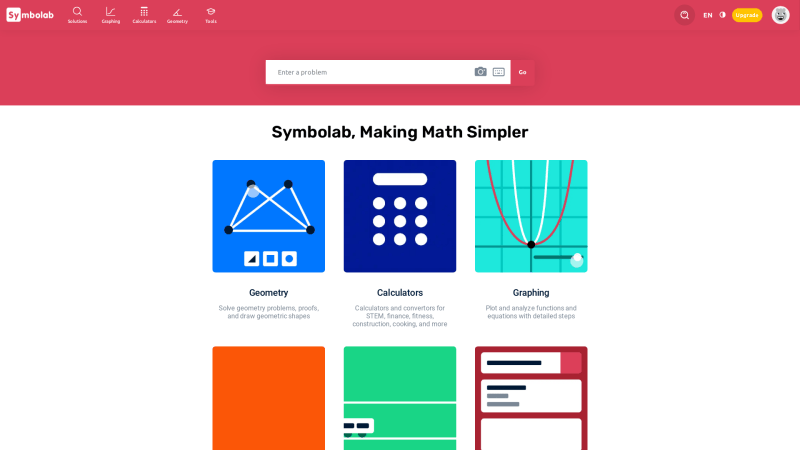
- Enhanced Visual Learning: Many iterations of the tool include graphing capabilities, allowing users to see the geometric representation of the algebraic equations they are solving.
- Accessibility and Availability: The cloud-based nature of the service ensures that high-level mathematical assistance is available 24/7, regardless of a student's geographic location or access to private tutoring.

Comparative Analysis
| Feature | Standard Scientific Calculator | Symbolab AI Math Solver |
|---|---|---|
| Primary Output | Numerical Result Only | Step-by-Step Logical Derivation |
| Symbolic Reasoning | Limited to basic functions | Advanced symbolic manipulation |
| Educational Utility | Low (Verification only) | High (Instructional tool) |
| Input Complexity | Basic arithmetic/trigonometry | Complex multi-line equations |
Future Trends and Innovations
The trajectory of mathematical AI points toward even deeper integration with multimodal interfaces. We are moving toward a future where the symbolab ai math solver will not just rely on typed input, but will seamlessly interpret voice commands and real-time video feeds. Imagine a student pointing a smartphone camera at a handwritten problem on a chalkboard and receiving an instant, interactive, and conversational explanation of the solution. This convergence of computer vision and symbolic reasoning will make mathematical assistance truly ubiquitous.
Furthermore, the integration of Large Language Models (LLMs) with specialized symbolic engines will likely lead to "conversational mathematics." Instead of simply receiving steps, users will be able to ask follow-up questions such as, "Why did we use the substitution method here instead of integration by parts?" This shift from a static solver to a dynamic, reasoning interlocutor will redefine the boundaries of digital pedagogy, turning every device into a highly sophisticated, personalized mathematics tutor.
Conclusion
The emergence of the symbolab ai math solver marks a pivotal moment in the history of educational technology. By combining the precision of symbolic computation with the explanatory power of artificial intelligence, it has provided a solution to one of the most enduring challenges in STEM education: the gap between obtaining an answer and understanding the process. It is a tool that respects the complexity of mathematics while making that complexity accessible to a global audience.
As we look forward, the continued refinement of these technologies will undoubtedly continue to lower the barriers to entry for mathematical sciences. While the core principles of mathematics remain eternal, the methods by which we interact with them are undergoing a radical transformation. Embracing these tools is not an act of intellectual shortcutting, but a strategic adoption of the most advanced cognitive aids available to the modern learner.
Comprehensive FAQs
Q: Is the symbolab ai math solver suitable for university-level engineering?
A: Yes, the platform is highly capable of handling university-level mathematics, including complex differential equations, linear algebra, and multivariable calculus, making it a robust tool for engineering students.
Q: How does this tool differ from a standard graphing calculator?
A: While a graphing calculator focuses on visualizing functions and providing numerical outputs, the symbolab ai math solver focuses on the algebraic derivation and the logical steps required to reach a solution.
Q: Can the AI interpret handwritten mathematical equations?
A: Many modern implementations of such AI solvers include optical character recognition (OCR) capabilities that allow users to upload photos of handwritten problems for processing and solution.
Q: Does using an AI math solver constitute cheating in a classroom setting?
A: This depends on the educational context. When used as a study aid to understand steps and verify work, it is a powerful learning tool. However, using it to bypass the learning process during assessments is generally considered academic dishonesty.
Q: Is there a difference between the free and premium versions of the service?
A: Typically, free versions provide the final answer and limited steps, whereas premium subscriptions unlock the full, detailed step-by-step breakdowns and advanced features essential for deep learning.
Leave a Comment
Comments are moderated before appearing. The data you submit is processed according to the Privacy Policy of cixa.org.