Tag
computer science
-

Why Data Structures and Algorithms in C Still Rule Software
Computational efficiency is not an accident; it is a deliberate orchestration of memory management and logical sequencing. At the heart of every...
-

Why Data Structures and Algorithms in Java Define Software Success
Software engineering is often perceived as the art of writing code that works. However, for high-performance systems, the distinction lies in writing code that...
-

Essential Techniques: How to Write a Function in C Effectively
Programming is an exercise in managing complexity. At the heart of this management lies the ability to modularize logic, breaking down monolithic blocks of...
-

Is n log n faster than n? Complexity Explained
In the rigorous architecture of computational theory, the efficiency of an algorithm is not merely a matter of preference but a fundamental constraint on what...
-

Decoding the Language: A Guide to Symbols in Keyboard with Names
Digital communication relies on a silent architecture of non-alphanumeric characters. While letters and numbers form the backbone of most text, the nuance...
-
Solving insufficient memory to continue the execution of the program
A software application is a living architecture of logic, data, and instructions. For a program to function, it requires a dedicated workspace—a finite...
-

Beyond the Equation: What is Computational Math?
Mathematics has long been viewed as the language of the universe, a collection of abstract truths etched into the fabric of reality. For centuries...
-
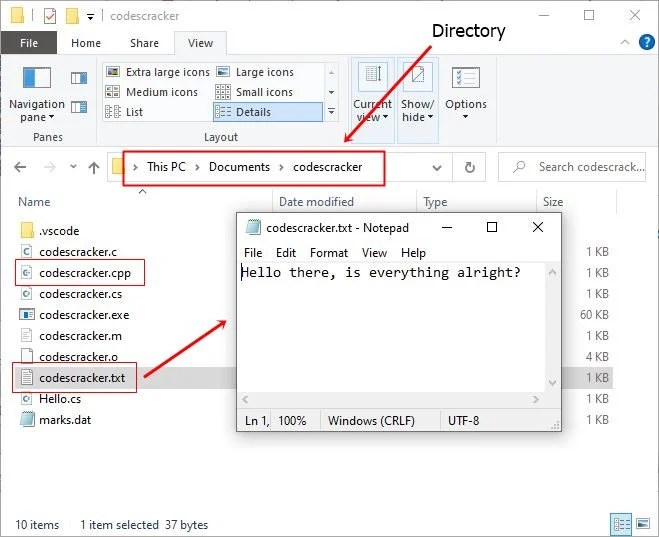
Understanding Sequential Input and Output Operations in C
At the heart of every computational process lies the movement of information. Whether a program is reading a configuration file, logging system telemetry, or...
-

Understanding Singly Linked List Operations Time Complexity
In the rigorous landscape of software engineering, the selection of a data structure is rarely a matter of preference and almost always a matter of...
-

Logic and Precision: How to Reverse a Linked List Efficiently
Data structures form the silent architecture of modern computing. While high-level abstractions allow developers to build complex applications with ease, the...
-

Understanding the Basics: What is a Literal in Programming?
At the foundation of every line of code written by engineers across the globe lies a distinction between identity and value. When a developer writes a script...
-

Understanding Passing by Value vs Passing by Reference
In the architecture of software engineering, the way data moves between different scopes of a program dictates not just the correctness of the logic, but the...
-

Why java floating point 0.14 precision comparison integer arithmetic fails
Software reliability often hinges on the smallest of details, yet some of the most catastrophic logic errors stem from the fundamental way hardware represents...
-

Understanding Digital Scale: Is KB Bigger Than GB?
Digital literacy requires more than just knowing how to operate a device; it demands an understanding of the invisible architecture that governs our virtual...
-

Understanding what are three responsibilities of the transport layer
Data transmission across global networks is an intricate ballet of protocols, timing, and precision. While users interact with high-level applications like web...
-

How to Reverse a Linked List: A Technical Deep Dive
Data structures serve as the skeletal framework of efficient software engineering. Among these, the linked list stands as a fundamental concept, representing a...
