Tag
Critical Thinking
-

How to Classify Each of the Following Statements as Positive or Normative
The ability to distinguish between what is and what ought to be represents the fundamental divide in analytical thought. In the realm of social sciences...
-
How to Identify the True and False Statements About Culture
Cultural literacy is often mistaken for a mere collection of facts regarding holidays, cuisines, or traditional dress. However, true sociological competence...
-

How to Choose the Best Answer for Each Question Effectively
Precision in selection is not merely a mechanical skill; it is a cognitive discipline. Whether one is facing a high-stakes standardized examination, a complex...
-

Understanding Truth: What Does It Mean to Rationalize?
Human cognition is a labyrinth of contradictions. We consider ourselves logical beings, driven by evidence and reason, yet we frequently find ourselves...
-

Precision in Speech: What Does It Mean to Qualify a Statement?
The art of communication is often mistakenly equated with the volume of one's voice or the unwavering certainty of one's tone. In truth, the most profound...
-

The Art of Logic: How Do You Find the Solution to Complex Problems
Problem-solving is rarely a linear event. It is an intricate dance between intuition and rigorous logic, a process that separates the reactive mind from the...
-

What conclusion can be drawn based on at specific data points?
The ability to synthesize disparate pieces of information into a coherent narrative is perhaps the most vital skill in the contemporary intellectual landscape...
-

Why You Should Circle the Term That Does Not Belong
Human intelligence is fundamentally rooted in the ability to categorize. From the moment an infant distinguishes between a solid object and a liquid, the brain...
-

How to Use a Step by Step Problem Solving Guide for Success
Complexity is an inherent feature of modern existence. Whether navigating a high-stakes corporate merger, troubleshooting a technical failure, or managing...
-

Seeking Clarity: What is the Answer to the Problem?
The human experience is defined by a persistent state of friction. From the moment consciousness emerges, we find ourselves confronted by obstacles—biological...
-

Solving the Mystery: Which One of the Following Statements is False
The human brain is hardwired to seek patterns, truths, and consistent narratives. When presented with a list of assertions, our cognitive processes...
-

Why Every Example of an Ad Hominem Fallacy Matters
Logic serves as the invisible architecture of human civilization. When we engage in debate, we rely on the structural integrity of premises and conclusions to...
-
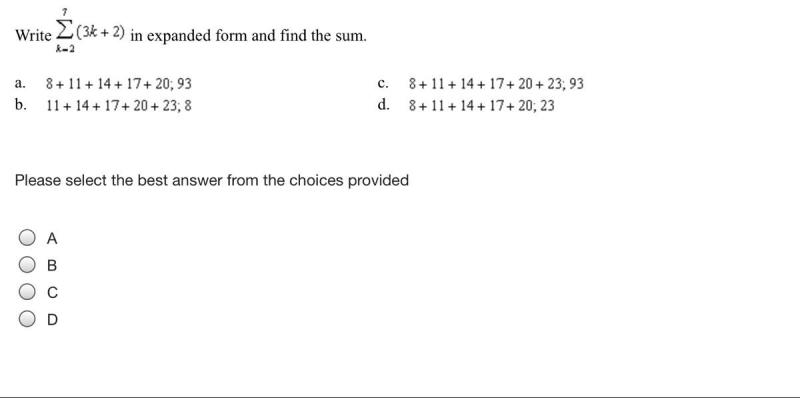
How to select the best answer from the choices provided t f
The ability to process information and arrive at a definitive conclusion is a cornerstone of cognitive efficiency. When faced with a prompt that requires one...
-
Solving the Riddle: What is a Punisher Choose the Best Answer
In the realm of cognitive assessment and psychometric testing, specific terminology often emerges to categorize types of problems that test a candidate's...
-

Decoding the Logic: Why Which of the following is not true of Matters
The architecture of a question often dictates the quality of the answer. In the realms of standardized testing, legal interrogation, and academic assessment...
-

Solving the Mystery: What is the Missing Statement in Step 5?
The pursuit of logical perfection often leads researchers and students alike to a frustrating impasse. It is a phenomenon frequently encountered in...
-

Decoding the Logic: 26 sheep 5 died how many left 15
At first glance, the proposition presented in the phrase 26 sheep 5 died how many left 15 appears to be a straightforward arithmetic problem. To the casual...
-

Identifying Logic: Which of the Following is an Example of Critical Thinking
The distinction between a reactive mind and a reflective mind defines the boundary between mere existence and intentional living. Most people navigate their...
-

Why I Am Going to Cause Problems on Purpose to Find Truth
The impulse to maintain harmony is often mistaken for a virtue, yet in many professional and personal spheres, it functions as a mask for stagnation. When a...
-

How to Identify Which One of the Following Statements Contains Bias
The ability to parse information is no longer a luxury of the academic elite; it is a fundamental survival skill in an era defined by information density. When...

