Understanding Science: What is a Control Variable?
Precision is the bedrock of all credible inquiry. Whether one is conducting a high-stakes clinical trial in a pharmaceutical laboratory or testing the structural integrity of a new architectural material, the ability to isolate cause and effect is paramount. Without the ability to distinguish between a genuine reaction and mere coincidence, the pursuit of knowledge becomes a chaotic exercise in guesswork. This distinction relies heavily on a fundamental concept in experimental design: the ability to manage external influences.
In the pursuit of empirical truth, researchers face a constant battle against noise. Noise, in a scientific context, refers to any extraneous factor that might inadvertently influence the outcome of an experiment. If a scientist is testing the effect of sunlight on plant growth but fails to ensure that every plant receives the same amount of water, the resulting data is fundamentally compromised. The researcher cannot certain if the growth was spurred by the light or the hydration levels. To prevent such ambiguity, specific parameters must be held constant.
This leads us to a fundamental question for any student of logic or science: what is a control variable? By defining and stabilizing these elements, researchers create a controlled environment where the relationship between the independent variable (the cause) and the dependent variable (the effect) can be observed with absolute clarity. Understanding this mechanism is not merely an academic requirement; it is a prerequisite for anyone seeking to interpret data with professional rigor.

The Complete Overview of Control Variables
At its most fundamental level, a control variable is any factor that is kept constant throughout an experiment to prevent it from influencing the results. In a well-designed study, the researcher manipulates one specific element—the independent variable—to see how it impacts another element—the dependent variable. However, the world is rarely so simple. Numerous other factors exist that could potentially sway the outcome. By identifying these potential influencers and ensuring they remain unchanged across all experimental groups, the researcher effectively "controls" the environment.
The primary purpose of identifying what is a control variable is to ensure internal validity. Internal validity refers to the extent to which a study can rule out alternative explanations for its findings. If a researcher fails to account for a control variable, they risk committing a "confounding error." This occurs when an outside factor changes alongside the independent variable, making it impossible to determine which one actually caused the observed change. Therefore, the control variable acts as a stabilizer, providing a baseline of consistency that allows the true relationship between variables to emerge.
Historical Background and Evolution
The formalization of experimental control can be traced back to the early days of the scientific revolution, though the terminology has evolved significantly. Early natural philosophers often relied on observation rather than controlled experimentation. It was not until the development of the scientific method by figures like Francis Bacon and later, the rigorous statistical approaches of the 19th and 20th centuries, that the necessity of isolating variables became a standardized practice. The shift from qualitative observation to quantitative measurement necessitated a way to manage the "interference" of the natural world.
Table of Contents
- The Complete Overview of Control Variables
- Historical Background and Evolution
- Core Mechanisms: How It Works
- Key Benefits and Crucial Impact
- Major Advantages
- Comparative Analysis
- Future Trends and Innovations
- Conclusion
- Comprehensive FAQs
- Q: Can a control variable also be an independent variable?
- Q: What happens if I forget to identify a control variable?
- Q: How do I decide which variables should be controlled?
- Q: Is it possible to control too many variables?
- Q: What is the difference between a control group and a control variable?
As the field of statistics matured, particularly through the work of Ronald A. Fisher, the concept of experimental design became more sophisticated. Fisher introduced the importance of randomization and the systematic control of nuisance variables. This evolution transformed the role of the researcher from a mere observer into a meticulous architect of environments. Today, the concept is no longer just about keeping things "the same"; it involves complex statistical modeling to account for variables that cannot be physically held constant, marking a transition from simple laboratory control to advanced multivariate analysis.
Core Mechanisms: How It Works
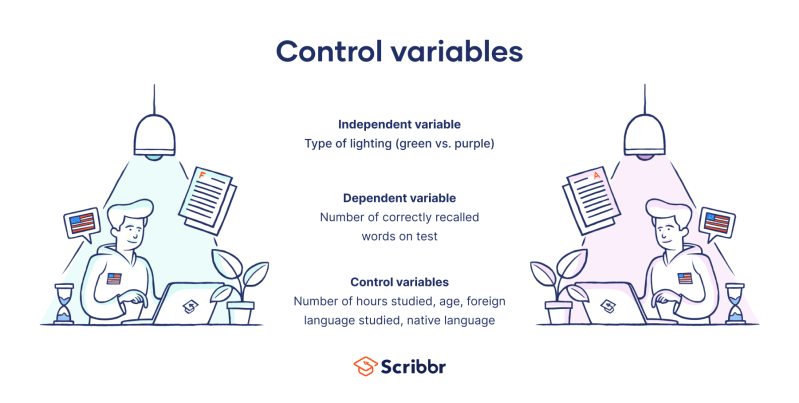
The mechanism of control functions through a process of standardization. Once a researcher identifies potential confounding factors—such as temperature, pressure, time of day, or participant age—they must establish a protocol to keep these elements identical across all test subjects or experimental groups. For instance, if testing a new fertilizer, the control variables might include the type of soil, the volume of water, the amount of light, and the ambient temperature. By keeping these constant, any difference in plant height can be attributed solely to the fertilizer itself.
Technically, this involves the creation of a "control group" and an "experimental group." While the experimental group receives the treatment (the independent variable), the control group is kept under identical conditions but does not receive the treatment. This comparison is the mechanism by which the influence of the control variables is validated. If both groups are kept under the same controlled conditions, and only the experimental group shows a change, the researcher has successfully isolated the effect of the independent variable. This systematic exclusion of alternative causes is the core engine of scientific proof.
Key Benefits and Crucial Impact
The implementation of rigorous control protocols serves as the primary defense against misinformation and flawed conclusions. In an era where data-driven decision-making governs everything from public policy to global finance, the ability to distinguish between correlation and causation is a high-value skill. Without a clear understanding of what is a control variable, organizations risk investing millions into strategies based on "phantom" trends that were actually caused by unmonitored environmental shifts.
Furthermore, the impact of these variables extends into the realm of reproducibility. A cornerstone of the scientific community is that a study must be replicable by other researchers to be considered valid. If the control variables are not clearly defined and strictly maintained, other scientists will be unable to recreate the exact conditions of the original experiment, leading to inconsistent results and a breakdown in scientific consensus. Control, therefore, is the language through which science communicates its reliability.
"To observe a phenomenon is one thing; to isolate its cause is the very essence of science. Without control, we are merely spectators to coincidence."
Major Advantages
- Elimination of Confounding Factors: Prevents outside influences from skewing the data and creating false correlations.
- Enhanced Internal Validity: Ensures that the results of the experiment are actually caused by the independent variable being tested.
- Increased Precision: Allows for more accurate measurements by reducing the "noise" or variance within the experimental data.
- Facilitation of Replication: Provides a clear blueprint for other researchers to follow, ensuring the study can be verified.
- Statistical Power: By reducing unexplained variance, researchers can more easily detect significant effects even with smaller sample sizes.

Comparative Analysis
| Variable Type | Role in Experiment | Relationship to Outcome |
|---|---|---|
| Independent Variable | The factor being manipulated or changed. | Directly intended to cause a change. |
| Dependent Variable | The factor being measured or observed. | The outcome that responds to the change. |
| Control Variable | The factor kept constant and unchanging. | Must not influence the outcome. |
| Confounding Variable | An uncontrolled outside influence. | Distorts the true relationship. |
Future Trends and Innovations
As we move further into the age of Big Data and Artificial Intelligence, the way we handle control variables is undergoing a radical transformation. In traditional laboratory settings, control is physical—you adjust a thermostat or a pipette. However, in the realm of digital experimentation and social science, control is increasingly mathematical. Machine learning algorithms are now being used to identify and "control" for thousands of variables simultaneously through complex regression models, allowing researchers to find patterns in datasets that were previously considered too "noisy" to analyze.
Moreover, the rise of "In Silico" experimentation—simulations conducted entirely within computer models—is redefining the concept of a controlled environment. In these digital twin environments, researchers can manipulate variables with a level of precision that is physically impossible in the real world. We can simulate a thousand years of climate change or the spread of a virus in seconds, holding every single atmospheric or biological parameter constant with mathematical perfection. This evolution suggests that the future of control lies in the seamless integration of physical experimentation and computational precision.
Conclusion
In summary, understanding what is a control variable is fundamental to anyone engaging in any form of systematic inquiry. These variables are the silent guardians of experimental integrity, working behind the scenes to ensure that the relationship between cause and effect remains untainted by external interference. By standardizing the environment and isolating the specific factors of interest, researchers can move beyond mere observation and toward true understanding.
Whether you are a student of biology, a data scientist, or a curious professional, recognizing the importance of control is essential. It is the difference between seeing a pattern and understanding its origin. As our methods for measuring the world become more sophisticated, our ability to control and account for the myriad variables of existence will continue to be the defining characteristic of human progress and scientific truth.
Comprehensive FAQs
Q: Can a control variable also be an independent variable?
A: No. By definition, an independent variable is the factor you intentionally change to observe an effect, whereas a control variable is a factor you intentionally keep the same to prevent it from causing an effect. If you change a control variable, it ceases to be a control and becomes an independent variable, which can ruin the experiment's design.
Q: What happens if I forget to identify a control variable?
A: If a critical factor is not controlled, it becomes a confounding variable. This means your results may show a correlation that doesn't actually exist, or it may hide a relationship that does. This leads to "false positives" or "false negatives," ultimately making your research findings unreliable and unscientific.
Q: How do I decide which variables should be controlled?
A: You should identify any factor that has the potential to influence your dependent variable. Ask yourself: "If this factor were to change, would it affect my results?" If the answer is yes, that factor must be treated as a control variable and kept constant across all groups in your study.
Q: Is it possible to control too many variables?
A: While it is better to control too many than too few, excessive control can sometimes limit the "real-world" applicability (external validity) of your findings. If a study is conducted in an environment that is too artificial, the results might not translate to the messy, complex conditions of the actual world.
Q: What is the difference between a control group and a control variable?
A: A control group is a specific group of subjects in an experiment that does not receive the treatment being tested, serving as a baseline. A control variable is a specific condition or factor (like temperature or age) that is kept identical for both the control group and the experimental group.
Leave a Comment
Comments are moderated before appearing. The data you submit is processed according to the Privacy Policy of cixa.org.