Finding the yipitdata readypipe open source repository or documentation
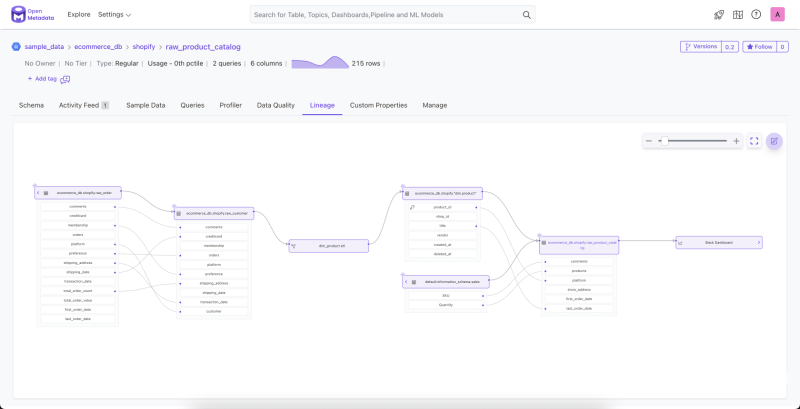
The Architecture of Modern Data Orchestration
Data engineering has transitioned from a niche technical requirement to the foundational backbone of global enterprise intelligence. As organizations grapple with increasingly fragmented data landscapes, the need for robust, scalable, and reproducible pipelines has become paramount. The search for high-quality infrastructure often leads engineers toward specific frameworks designed to bridge the gap between raw data ingestion and actionable analytical output. In this context, understanding the nuances of specialized tools is essential for any technical lead aiming to optimize their stack.
One specific area of interest for many developers involves the search for the yipitdata readypipe open source repository or documentation. This search is not merely about finding a collection of scripts; it is about locating a methodology for managing complex data flows with precision. When engineers look for these resources, they are typically seeking a way to standardize how data is transformed, validated, and moved across distributed systems. The availability of such information dictates how quickly a team can deploy reliable data products.
Navigating the intersection of proprietary data expertise and open-source utility requires a keen eye for detail. Whether an organization is looking to adopt existing patterns or build upon them, the clarity of available technical guides determines the success of the implementation. This article examines the structural importance of these resources and the technical implications of integrating such frameworks into a modern data ecosystem.
The Complete Overview of yipitdata readypipe open source repository or documentation
The search for the yipitdata readypipe open source repository or documentation often stems from a desire to implement highly structured data ingestion patterns. At its core, the concept revolves around creating "ready" pipelines—systems that are not just functional, but are architected to be resilient, observable, and easily maintainable. This approach moves away from the "adhoc" scripting method that has historically plagued data teams, favoring instead a modular architecture that treats data movement as a first-class software engineering discipline.
For those attempting to locate the specific yipitdata readypipe open source repository or documentation, it is important to understand that these resources serve as a blueprint for high-fidelity data collection. They provide the logic necessary to handle schema evolution, error handling, and state management. By leveraging these documented patterns, data engineers can ensure that the data flowing into their warehouses is consistent and meets the rigorous standards required for quantitative analysis and machine learning workloads.
Historical Background and Evolution
The evolution of data pipeline management has moved through several distinct eras. Initially, data movement was handled by simple ETL (Extract, Transform, Load) tools that were often rigid and difficult to version control. As the volume of data exploded with the advent of cloud computing, these monolithic tools became bottlenecks. The industry shifted toward "ELT" (Extract, Load, Transform) and the rise of orchestration frameworks, which allowed for more flexibility and the use of SQL-based transformations directly within the data warehouse.
Within this evolution, the demand for specialized, highly reliable pipelines grew. The philosophy behind frameworks like the one sought in the yipitdata readypipe open source repository or documentation emerged from the need to solve specific problems in the alternative data space. In this sector, data is often unstructured, frequently changing, and highly sensitive to latency. The development of standardized, repeatable pipeline patterns was a direct response to the chaos of manual data scraping and ingestion, leading to the more sophisticated, code-driven approaches we see today.
Table of Contents
- The Architecture of Modern Data Orchestration
- The Complete Overview of yipitdata readypipe open source repository or documentation
- Historical Background and Evolution
- Core Mechanisms: How It Works
- Key Benefits and Crucial Impact
- Major Advantages
- Comparative Analysis
- Future Trends and Innovations
- Conclusion
- Comprehensive FAQs
- Q: Why is it difficult to find the yipitdata readypipe open source repository or documentation directly?
- Q: How does a structured pipeline differ from a traditional ETL process?
- Q: Can these pipeline patterns be applied to any data source?
- Q: What is the role of "idempotency" in data pipelines?
- Q: Do I need to be a software engineer to use these frameworks?
Core Mechanisms: How It Works
The mechanics of a high-performance data pipeline rely on a series of interconnected stages: ingestion, validation, transformation, and loading. A sophisticated framework ensures that each stage is decoupled, allowing for independent scaling and easier debugging. When utilizing the principles found in the yipitdata readypipe open source repository or documentation, engineers focus on idempotency—the ability to run the same process multiple times without changing the result beyond the initial application. This is crucial for recovering from failures without duplicating data.
Furthermore, these systems implement rigorous schema enforcement and data quality checks at every junction. Instead of allowing "bad" data to propagate through the system, the pipeline acts as a filter. If a data source changes its format unexpectedly, the pipeline identifies the discrepancy immediately through automated validation layers. This proactive error detection is what separates professional-grade data engineering from amateur implementations, ensuring that downstream analysts are always working with high-integrity datasets.

Key Benefits and Crucial Impact
Implementing standardized pipeline architectures yields immediate dividends in both operational efficiency and data reliability. By moving away from bespoke, one-off solutions, teams can reduce the cognitive load required to maintain their infrastructure. When every pipeline follows a predictable pattern, onboarding new engineers becomes faster, and the surface area for potential bugs is significantly reduced.
Moreover, the impact extends to the business's ability to make decisions. In an era where data-driven insights are a competitive advantage, the speed and accuracy of the data pipeline directly correlate with the organization's agility. A well-documented and structured approach ensures that the "time-to-insight" is minimized, allowing stakeholders to react to market changes in real-time rather than waiting for delayed, error-prone reports.
"The reliability of an organization's intelligence is strictly limited by the integrity of its data pipelines; you cannot build a skyscraper on a foundation of shifting sand."
Major Advantages
- Enhanced Scalability: Modular designs allow teams to scale specific parts of the pipeline as data volumes grow without needing to rewrite the entire system.
- Improved Observability: Standardized frameworks provide built-in logging and monitoring, making it easy to identify exactly where a failure occurred.
- Reduced Technical Debt: Using documented, repeatable patterns prevents the accumulation of "spaghetti code" that typically occurs with custom ETL scripts.
- Data Integrity Assurance: Automated validation layers ensure that only high-quality, schema-compliant data reaches the final destination.
- Faster Iteration Cycles: With a stable infrastructure in place, engineers can focus on creating new data products rather than fixing broken ingestion scripts.
Comparative Analysis
To understand where these specialized resources fit, we must compare them against traditional methods and broader orchestration tools.
| Feature | Ad-hoc Scripting | General Orchestrators (Airflow) | Structured Pipeline Frameworks |
|---|---|---|---|
| Maintenance Effort | Extremely High | Moderate | Low |
| Error Handling | Manual/None | Configurable | Built-in/Automated |
| Schema Enforcement | Difficult | Requires Custom Logic | Native/Core Component |
| Scalability | Limited | High | Very High |

Future Trends and Innovations
The future of data engineering is trending toward "DataOps," a methodology that applies DevOps principles—such as continuous integration and continuous deployment (CI/CD)—to data pipelines. We are seeing a move toward even more automated systems where the pipeline can self-heal or automatically adjust its schema based on machine learning-driven observations. The search for the yipitdata readypipe open source repository or documentation is a precursor to this trend, as it emphasizes the importance of code-centric, versionable, and testable data infrastructure.
Additionally, the rise of "Data Contracts" will likely redefine how pipelines interact with data producers. Instead of pipelines being passive recipients of data, they will be part of a formal agreement where producers guarantee specific qualities and formats. This shift will make the documentation and repository structures found in advanced frameworks even more critical, as they will serve as the enforcement mechanism for these digital contracts, ensuring seamless interoperability across the entire enterprise data mesh.
Conclusion
In conclusion, the pursuit of high-quality data engineering resources, such as the yipitdata readypipe open source repository or documentation, reflects a broader industry movement toward maturity and rigor. As data becomes the most valuable asset of the modern enterprise, the methods used to collect, clean, and transport that data must evolve from simple tasks into sophisticated, engineered systems. The shift from manual scripting to structured, documented frameworks is not just a technical preference; it is a business necessity.
By prioritizing modularity, observability, and idempotency, organizations can build data foundations that are resilient to the inevitable changes in the digital landscape. Whether through adopting open-source patterns or developing internal standards based on proven methodologies, the goal remains the same: to transform raw, chaotic information into a reliable stream of truth that drives strategic growth and innovation.
Comprehensive FAQs
Q: Why is it difficult to find the yipitdata readypipe open source repository or documentation directly?
A: Many companies keep their core orchestration logic within private repositories to protect proprietary methodologies and security configurations. However, the patterns they use are often based on widely accepted open-source principles that can be studied and implemented independently.
Q: How does a structured pipeline differ from a traditional ETL process?
A: Traditional ETL is often a linear, monolithic process. A structured pipeline, as described in advanced documentation, is modular, version-controlled, and treats every step as a discrete, testable unit of software, allowing for much higher reliability and easier updates.
Q: Can these pipeline patterns be applied to any data source?
A: Yes. While specific implementations might be tailored to certain types of data (like web-scraped or financial data), the underlying principles of validation, idempotency, and schema enforcement are universal and applicable to any data ingestion task.
Q: What is the role of "idempotency" in data pipelines?
A: Idempotency ensures that if a pipeline job is run multiple times (for example, after a network failure), it will not create duplicate records or corrupt the existing data. It is a critical feature for maintaining data integrity in distributed systems.
Q: Do I need to be a software engineer to use these frameworks?
A: While these frameworks move data engineering closer to software engineering, they are designed for data professionals. A strong understanding of SQL and basic Python is typically sufficient to leverage the power of structured pipeline architectures.
Leave a Comment
Comments are moderated before appearing. The data you submit is processed according to the Privacy Policy of cixa.org.