Tag
cognitive science
-

Why the book is to reading as fork is to eating
The relationship between a medium and an experience is rarely a matter of simple utility. When we examine the fundamental structures of human interaction with...
-

Why Things Spelled Backwards That Are the Same Fascinate Us
Language is often viewed as a linear progression, a one-way street of phonetic and orthographic signals moving from left to right. We consume meaning through a...
-

Understanding Psychology: Which of the Following is True Concerning Triggers
Human behavior is rarely a series of isolated, random events. Instead, it is a sophisticated tapestry of reactions woven from past experiences, biological...
-

Do Smart People Talk to Themselves? The Science of Self-Talk
The human mind is rarely silent. For many, the internal landscape is a constant stream of words, ideas, and critiques. This phenomenon, often referred to as...
-

Understanding: Is Executive Dysfunction a Symptom of ADHD?
The internal struggle of knowing exactly what needs to be done, yet finding oneself physically or mentally incapable of initiating the task, is a phenomenon...
-

How Much Wood Could a Woodchuck Could Chuck Wood Reveals Linguistic Science and Logic
The nursery rhyme is often dismissed as mere playground fodder, a rhythmic distraction for children navigating the early stages of speech acquisition. However...
-

Strategies to fill in the blanks in symbol column of the table
The human intellect is fundamentally a pattern-seeking mechanism. From the moment we perceive the rhythmic cycles of the seasons to the complex recognition of...
-

Decoding Logic: Why swim is to paddle as fly is to soar
Linguistic analogies serve as the architectural scaffolding of human cognition. They are not merely word games or academic exercises; they are the cognitive...
-

Why You Must Choose the Letter of the Best Answer
The directive to choose the letter of the best answer is more than a mere instruction found at the top of a standardized examination. It is a fundamental...
-

Solving why one bird can make a pun nyt crossword
The ritual of the morning crossword is a cornerstone of intellectual engagement for millions. It is a moment of quietude, a cerebral exercise performed over...
-

Decoding Complexity: What Type of Problem Is This?
When a crisis emerges or a technical glitch disrupts a workflow, the immediate human reaction is often one of frustration rather than analysis. We tend to...
-

Why You Should Drag the Right Word to Its Definition
Language acquisition is often perceived as a passive endeavor, a slow accumulation of syntax and semantics through reading and listening. However, modern...
-
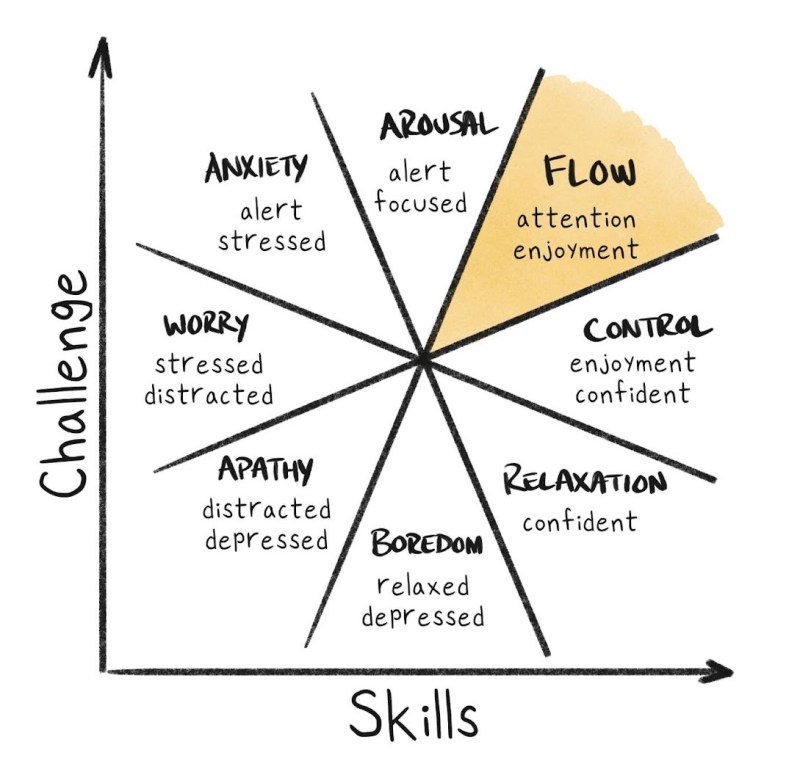
Navigating the Flow State in the Bruh Dimension
Modern consciousness is undergoing a subtle yet profound shift, driven by the intersection of digital saturation and neurological adaptation. We are witnessing...
-

Why the retention of information or experience over time is called memory
Human consciousness is defined not by the fleeting moments we inhabit, but by the continuity we maintain between them. Without the ability to anchor ourselves...
-

The Science of Why Repetition is the Mother of Learning
The distinction between a novice and an expert is rarely a matter of innate genius. While talent provides a baseline, the bridge between raw potential and true...
-

The Architecture of Memory in Past Tense and Human Identity
Human consciousness operates on a temporal axis, a continuous movement from what was to what is, and what might be. At the heart of this movement lies the...
-

Understanding What is the Role of Neural Pools in the CNS
The human brain does not function as a collection of isolated switches, but rather as a sophisticated network of integrated circuits. At the heart of this...
-

Decoding the Genius: Why is Albert Einstein So Smart?
The human intellect has long been obsessed with the outliers of cognition—those rare individuals whose mental architecture seems to operate on a plane...
-

Question 3 of 10how does the brain influence your emotions, thoughts, and life
The human experience is not a series of disconnected events but a continuous stream of internal processing. Every sensation, every fleeting feeling of joy, and...
-

The Psychology of Trivia: If Quizzes Are Quizzical
The human impulse to test one's knowledge is not merely a pastime; it is a fundamental drive rooted in the desire for intellectual validation. Whether it is a...